Last reviewed
Background
A southern gateway shaped by the Pearl River, long-distance trade and the everyday culture of a Cantonese-speaking metropolis.
Guangzhou stands at the lower reaches of the Pearl River in south-central Guangdong. A city was established here in the Qin period, and its river-and-sea connections helped it become one of China's most durable trading ports. Archaeology from the Nanyue Kingdom, historic religious sites, the Thirteen Factories district and the continuing importance of the Canton Fair all belong to this longer story of exchange.
Modern Guangzhou is a large, humid subtropical metropolis whose historic core, port districts and new central axis require deliberate grouping. Cantonese language, Yueju opera, clan halls, arcaded streets, morning tea and neighborhood food remain living parts of the city rather than museum decoration. Its climate brings long hot summers, heavy rain and occasional tropical-cyclone disruption, so flexible indoor and outdoor plans matter.
Recommended itineraries
Recommended itineraries
Guangzhou rewards neighborhood pacing. Keep the old city and Xiguan together, reserve a separate block for the eastern waterfront and use the metro for long transfers instead of copying the source guide's obsolete line map.
Heritage neighborhoods and the Pearl River
A first visit linking archaeology, Lingnan craft, port history, everyday food and the modern riverfront.
- Day 1 · Begin at the Nanyue King Museum's tomb exhibition area, continue through Yuexiu Park and Zhenhai Tower, then visit Sun Yat-sen Memorial Hall if current opening and reservation times fit.
- Day 2 · Give Chen Clan Ancestral Hall a focused morning, then walk the Xiguan side through Yongqing Fang, Lychee Bay and nearby arcaded streets. Finish on Shamian, reading its architecture through the treaty-port history rather than as a detached European quarter.
- Day 3 · Visit Sacred Heart Cathedral only during permitted visitor hours, then move east to Huacheng Square, Guangdong Museum or another major cultural venue, and the public riverfront around Canton Tower. Book a licensed Pearl River cruise only if the current schedule and weather suit you.
Slow Guangzhou with port and mountain context
A broader route that leaves room for morning tea, living neighborhoods and two geographically separate historical landscapes.
- Day 1 · Nanyue King Museum, Yuexiu Park, Zhenhai Tower and Sun Yat-sen Memorial Hall.
- Day 2 · Chen Clan Ancestral Hall, a traditional yum cha meal, Yongqing Fang, Lychee Bay and Xiguan's arcaded streets.
- Day 3 · Sacred Heart Cathedral, Shamian and a riverside walk toward the former Thirteen Factories area, using museums and plaques to understand Guangzhou's constrained Qing-era foreign trade and later concessions.
- Day 4 · Huacheng Square, Guangdong Museum or Guangzhou Opera House, Canton Tower's public surroundings and an optional authorized evening cruise.
- Day 5 · Choose Baiyun Mountain for a weather-dependent urban hike or Whampoa Military Academy for a focused modern-history visit on Changzhou Island; do not compress both across opposite parts of the city.
Attractions & practical tips
What to see—and how to approach it.
Nanyue King Museum
南越王博物院
The museum's King's Tomb exhibition area preserves the painted stone-chamber tomb of Zhao Mo, second king of Nanyue, and presents objects that connect early Lingnan politics with exchange across southern China and maritime routes.
Practical tips
- Guangzhou's Nanyue remains are presented across more than one exhibition area; confirm the exact venue named on your reservation before travelling.
- Allow time for the excavated tomb itself as well as the jade, metalwork and imported materials that explain Nanyue's wider connections.
Yuexiu Park and Zhenhai Tower
越秀公园与镇海楼
Central Guangzhou's largest historic park combines wooded slopes, surviving wall fragments, the Five Rams symbol and Zhenhai Tower, now used to interpret the city's history.
Practical tips
- Treat the Five Rams sculpture as a civic symbol rooted in legend, not evidence for the city's founding.
- The park is hilly and larger than it appears on a map; choose one entrance that matches your next stop and carry rain protection in the wet season.
Chen Clan Ancestral Hall
陈家祠
Built in the late nineteenth century by Chen lineages from across Guangdong, this hall-and-courtyard complex now houses the Guangdong Folk Arts Museum and showcases dense ceramic, wood, stone, brick and plaster decoration.
Practical tips
- Look up at the roof ridges and down at carved bases and doors; the architecture is as important as the objects in the galleries.
- Maintenance can close individual areas, so use the current museum notice rather than the source guide's historic hours.
Yongqing Fang and Lychee Bay
永庆坊与荔枝湾
The Xiguan area brings together restored lanes, arcaded streets, waterways, Cantonese-opera associations, traditional residences and contemporary neighborhood businesses in western Guangzhou.
Practical tips
- Move beyond the busiest renovated lane into surrounding public streets to see how heritage tourism and ordinary neighborhood life meet.
- Do not enter residential buildings or photograph people at close range without permission; some apparent attractions remain private homes.
Shamian Island
沙面
Tree-lined Shamian holds a concentrated group of former consulates, banks, churches and residences created in the foreign concessions after nineteenth-century treaty-port coercion. The surviving landscape records diplomacy, commerce and unequal power as well as architectural exchange.
Practical tips
- Use plaques or a guided history walk to identify original functions and later reuse instead of treating every façade as generic European scenery.
- Most buildings are viewed from public paths; respect offices, schools, worship spaces and conservation barriers.
Sacred Heart Cathedral
石室圣心大教堂
The granite Gothic Revival cathedral near the old commercial riverfront was constructed in the second half of the nineteenth century and remains an active Catholic church.
Practical tips
- Visitor access must give way to worship and church events; check the current notice and never enter during a closed period simply because a historic guide lists hours.
- Dress respectfully, keep voices low and follow all photography restrictions inside.
Sun Yat-sen Memorial Hall
中山纪念堂
A monumental octagonal hall built in the early Republican period commemorates Sun Yat-sen and provides a setting for understanding Guangzhou's role in China's revolutionary politics.
Practical tips
- The surrounding grounds and the auditorium may follow different access arrangements, especially when performances or official events are scheduled.
- Pair it with Yuexiu's modern-history sites and museum interpretation rather than relying on commemorative architecture alone.
Whampoa Military Academy Memorial
黄埔军校旧址纪念馆
The Changzhou Island site interprets the military academy founded in 1924 and its importance to Nationalist, Communist and wider twentieth-century Chinese military history.
Practical tips
- Give the island a dedicated half-day because the final transfer is slower than the map suggests and access procedures may change.
- Approach the exhibits as contested modern history; distinguish original remains, reconstruction and later memorial presentation.
Canton Tower and Huacheng Square
广州塔与花城广场
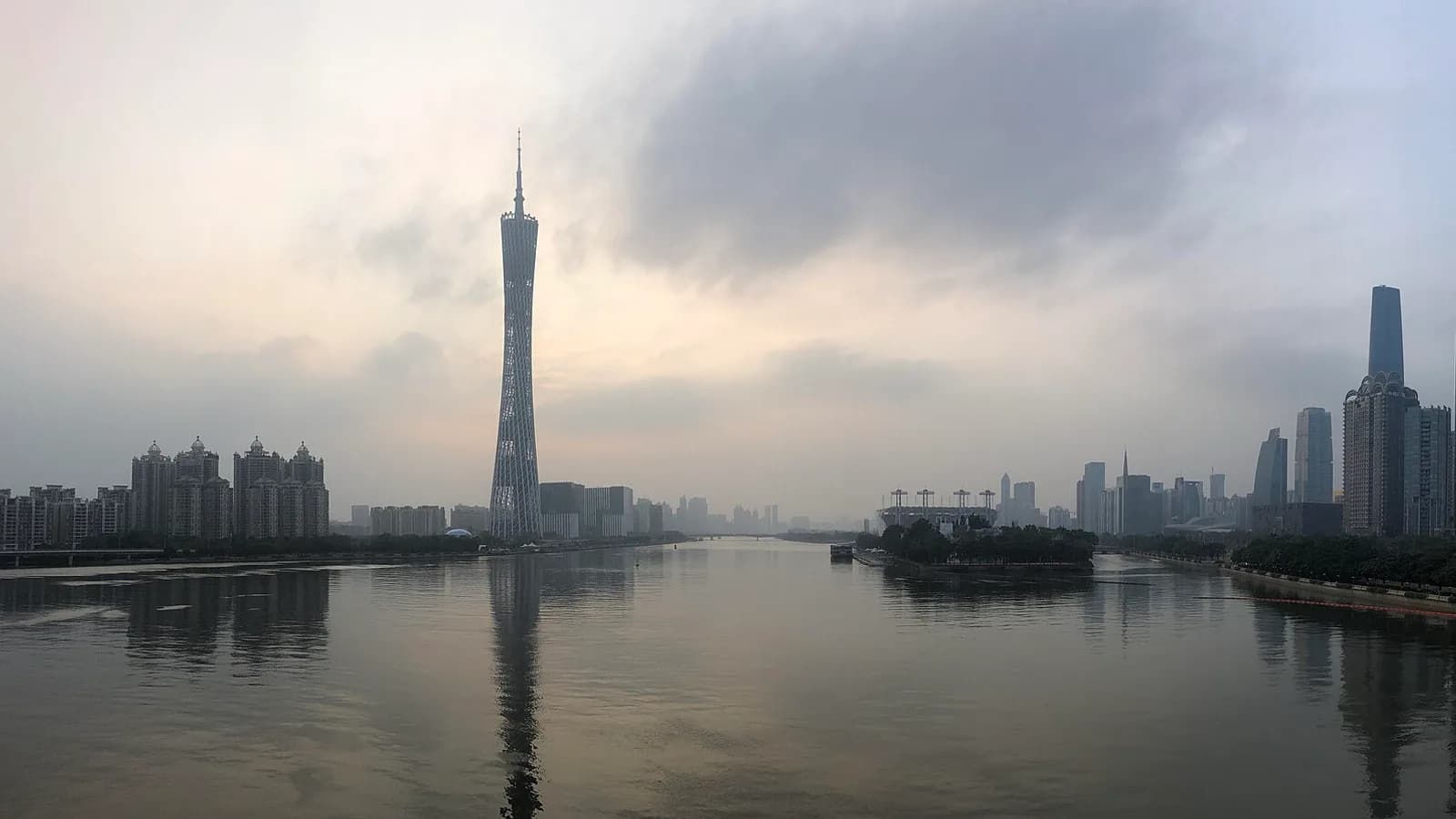
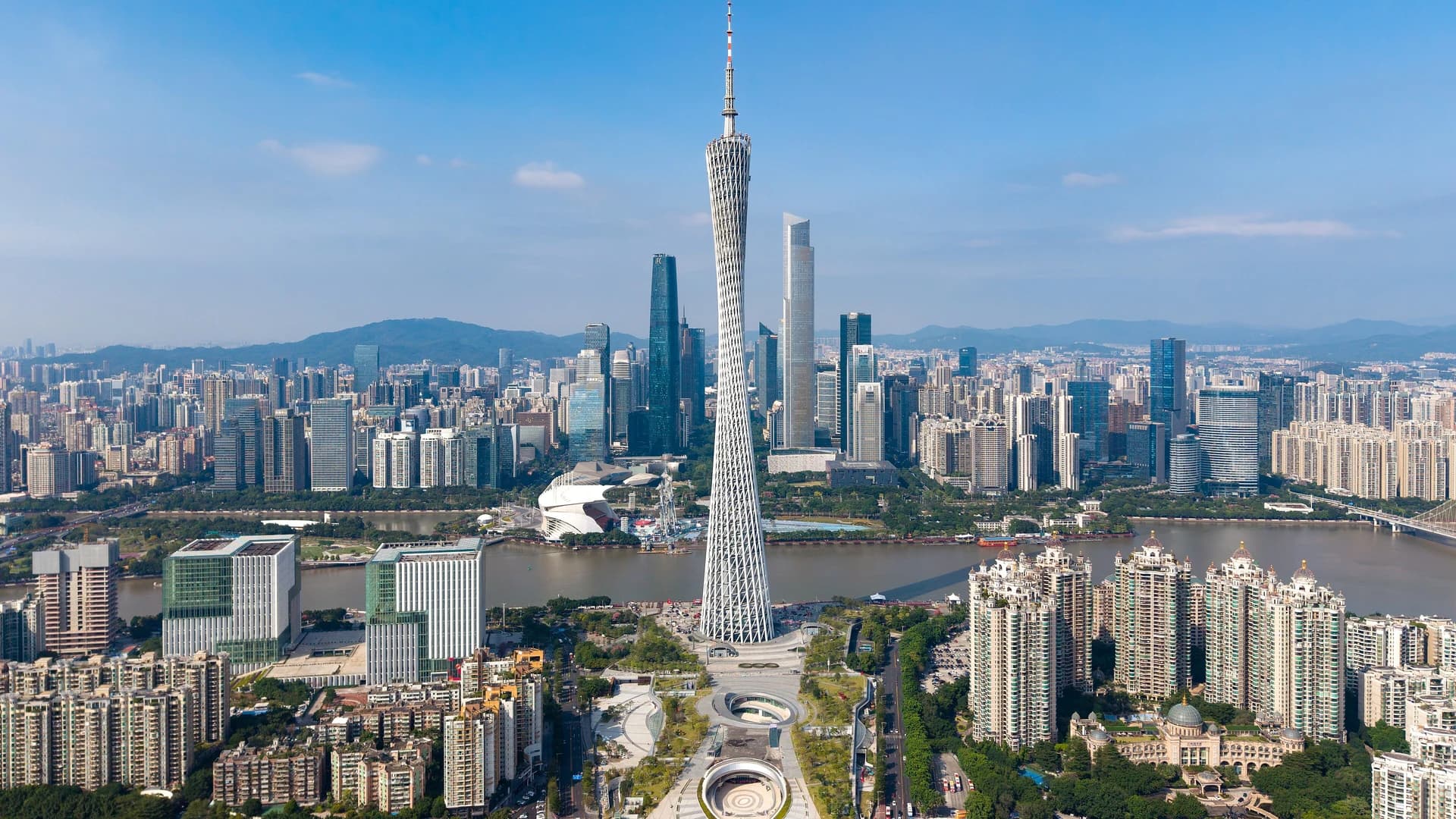
Across the Pearl River, Canton Tower and the civic axis around Huacheng Square present Guangzhou's contemporary skyline alongside the opera house, library and Guangdong Museum.
Practical tips
- The public riverfront and square provide strong skyline views without requiring a tower ticket; reserve timed indoor attractions separately if wanted.
- For an evening visit, check rain, lightning and visibility first and expect event-level crowds on major holidays.
Baiyun Mountain
白云山
A long green ridge north of the central city gives Guangzhou a close urban hiking landscape, with multiple gates, gardens, viewpoints and managed recreation areas.
Practical tips
- Choose a route and gate before setting out; crossing the whole scenic area takes far longer than a quick summit visit.
- Avoid exposed paths in thunderstorms, extreme heat or typhoon conditions, carry water and skip the source guide's dated adventure-ride promotions.
Food & dining
Eat with a little local context.
Guangzhou's food culture is best understood through routines rather than a checklist: morning tea, rice-based breakfasts, roast-meat counters, congee and neighborhood desserts. Order modestly at first, share dishes and state allergies clearly because shrimp, pork, peanuts, sesame and oyster sauce recur across menus.
Yum cha and dim sum
饮茶与广式点心
Morning or midday tea pairs a shared pot with small steamed, baked and fried dishes such as shrimp dumplings, siu mai, barbecue-pork buns and steamed spare ribs.
Try it this way: Ask how ordering works before sitting down, watch for a tea or table charge and order in rounds so hot dishes do not pile up.
Rice noodle rolls
肠粉
Thin sheets of steamed rice batter are folded around egg, beef, pork, shrimp or vegetables and finished with a light savory soy sauce.
Try it this way: Specify the filling and mention shellfish or soy allergies; plain-looking sauce may still contain seafood-derived seasoning.
Cantonese roast meats
广式烧味
Glazed char siu, roast duck, crispy pork and soy-sauce chicken are chopped to order and served over rice or as shared plates.
Try it this way: Point to the cut and portion you want, and ask whether bone, offal or sweet glaze is included.
White-cut chicken
白切鸡
Gently poached chicken is cooled, chopped through the bone and served for its clean flavor and supple skin, usually with ginger-scallion dip.
Try it this way: Order an appropriate fraction of a bird, expect bone-in pieces and choose a busy restaurant with good food-handling turnover.
Cantonese congee
广式粥品
Rice is cooked into a silky porridge and finished with fish, sliced meat, offal, century egg or fried-dough accompaniments; jidi congee is one classic mixed-offal version.
Try it this way: Ask about the exact additions and whether raw ingredients are cooked in the bowl, especially if you avoid offal or need food thoroughly cooked.
Double-skin milk
双皮奶
A smooth set-milk dessert associated with the Pearl River Delta is served warm or chilled, sometimes with red beans, fruit or other toppings.
Try it this way: It contains dairy and often egg white; ask before ordering if you have allergies rather than relying on the simple appearance.
FAQ
Questions worth answering before you go.
How many days should I spend in Guangzhou?
Three days cover the old-city museums, Xiguan and Shamian, plus the modern riverfront. Four or five days let you add Whampoa, Baiyun Mountain, more neighborhood meals or a weather buffer without turning the visit into repeated cross-city transfers.
When is the best time to visit Guangzhou?
Late autumn and early winter are often most comfortable for long walks. Spring is humid and rainy, while summer is hot, wet and exposed to tropical-cyclone disruption. Check the official forecast and transport notices, especially from May through October.
Do I need Cantonese to travel around Guangzhou?
Mandarin works widely and major transport uses bilingual signs, while Cantonese remains central to local life. Keeping Chinese place names and addresses on your phone helps with older restaurants and neighborhood stops, and a translation app fills most gaps.
Is Guangzhou easy to navigate by public transport?
Yes, but the city is large and stations with similar names can be far apart. Use a current map, verify the railway station and airport terminal on your ticket, and ignore the source guide's six-line metro map and old bus lists.
Should I book a Pearl River night cruise?
It can be a useful skyline overview, but pier, route, vessel and security-check details vary. Use an authorized operator, confirm the exact boarding point, carry the required identity document and accept weather or crowd-control changes. A public riverside walk is a good no-ticket alternative.