Last reviewed
Background
A port city where seven millennia of settlement, book culture and maritime exchange meet a modern harbor.
Ningbo stands where the Yong River system reaches the East China Sea, with a territory stretching from the central city to lakes, mountain valleys, fishing ports and offshore-facing counties. Known historically as Mingzhou, the city grew through coastal shipping and overseas trade; its contemporary port economy continues that outward-looking role on a far larger scale.
The wider Ningbo story reaches back to the Neolithic Hemudu culture and continues through Buddhist networks, imperial-era scholarship, merchant associations and modern migration. Tianyi Pavilion embodies a long tradition of private book collecting, while guild halls, former waterfront buildings and museums explain how local commerce connected inland eastern Zhejiang with maritime routes.
Recommended itineraries
Recommended itineraries
Central Ningbo is compact, but the municipality is not. Keep the historic core together, then give lakes, mountain heritage and the southern coast their own travel windows.
Books, museums and the old waterfront
A city-focused first visit linking Ningbo’s library heritage, riverside trade and contemporary museum architecture.
- Day 1 · Begin with Tianyi Pavilion and Moon Lake, pause around the older Haishu streets, then cross toward the Old Bund for an evening walk along the confluence.
- Day 2 · Explore Ningbo Museum’s regional-history galleries and distinctive reused-material architecture, then choose Dongqian Lake for a slower afternoon by the water.
Ningbo across coast, lake and mountains
A wider municipal route that treats remote heritage and coastal areas as destinations rather than quick add-ons.
- Day 1 · Follow the central-city route from Tianyi Pavilion and Moon Lake to the Old Bund and maritime-trade sites.
- Day 2 · Pair Ningbo Museum with Dongqian Lake, allowing time for one lakeside area instead of racing around the entire shore.
- Day 3 · Visit Tiantong Temple and its wooded setting, keeping the day quiet and respectful rather than adding a theme park.
- Day 4 · Travel to Xikou and Xuedou Mountain for a full day combining modern history, temple heritage and mountain scenery.
- Day 5 · Choose either Hemudu with Cicheng for archaeology and county-town history, or make a dedicated southern trip to Shipu’s fishing-port old town; do not attempt both in one compressed day.
Attractions & practical tips
What to see—and how to approach it.
Tianyi Pavilion and Moon Lake
天一阁与月湖
The sixteenth-century private library and the historic lake beside it form Ningbo’s most concentrated landscape of book culture, gardens, residences and scholarly memory.
Practical tips
- Give the library collections and architecture at least two hours, then continue around only the part of Moon Lake that matches your energy and museum interests.
- Check current reservation and conservation rules through the museum’s official channel; historic books and some rooms may rotate or have restricted access.
Old Bund and Qing’an Guildhall
老外滩与庆安会馆
At the meeting of the city’s rivers, former commercial buildings and the maritime guildhall trace Ningbo’s transition from regional shipping center to treaty-port waterfront.
Practical tips
- Visit the guildhall or another historical interior before the evening so the waterfront does not become only a nightlife backdrop.
- Read surviving buildings in the context of trade and the unequal treaty-port system rather than treating all old façades as a single romantic period.
Ningbo Museum
宁波博物馆
Regional history, folk culture and changing exhibitions sit inside Wang Shu’s monumental building, whose walls reuse tiles and brick to evoke the material memory of eastern Zhejiang.
Practical tips
- Start with the regional-history galleries to establish context for later visits to Hemudu, the port and old towns.
- Use the museum’s current reservation channel and allow time to view the building from outside as well as the galleries.
Dongqian Lake
东钱湖
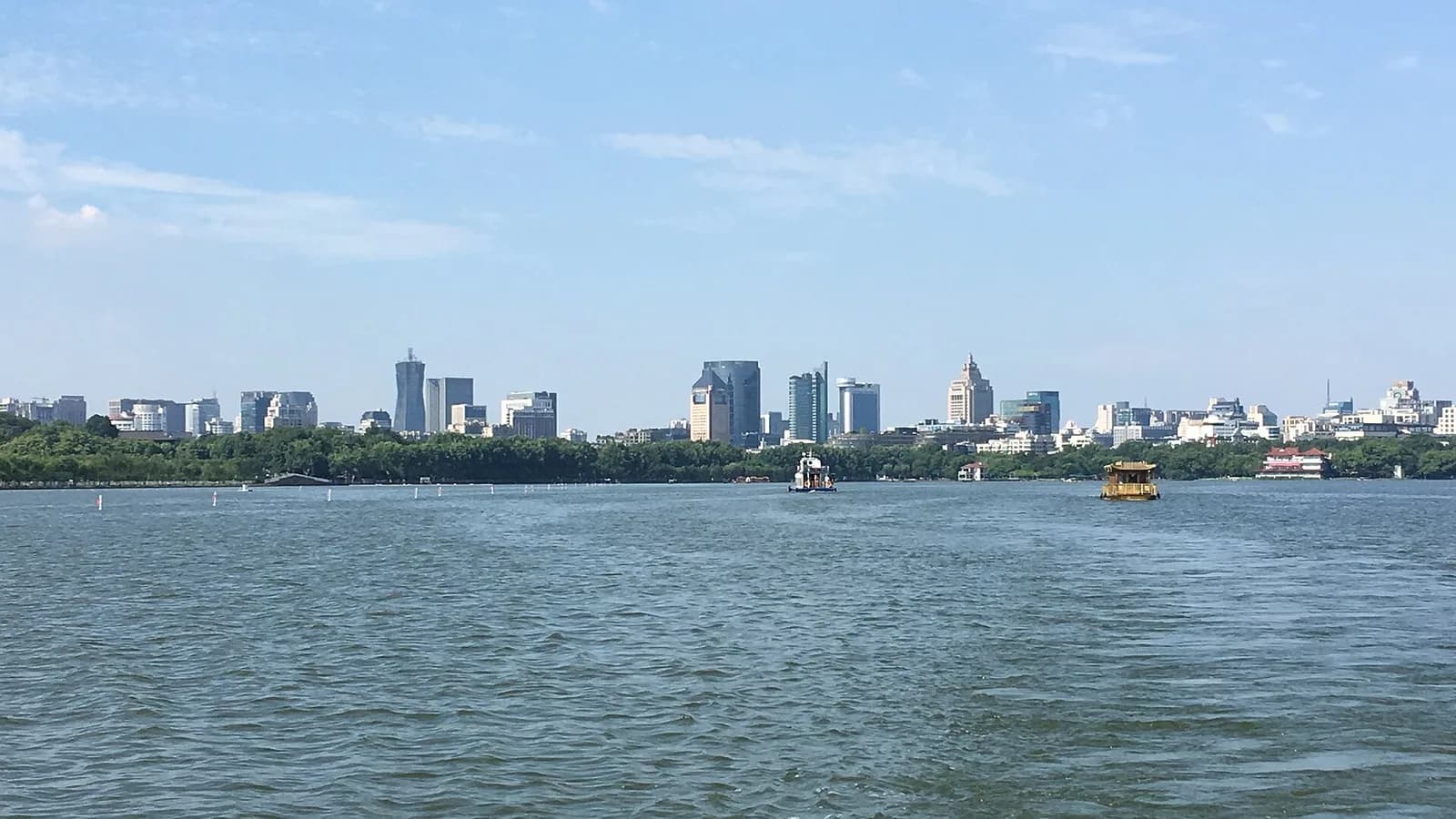
Ningbo’s large freshwater lake combines open water, wooded hills, villages and cultural sites across a broad shore east of the city.
Practical tips
- Choose one lakeside cluster and verify current transport rather than assuming the whole lake can be walked or visited in a single afternoon.
- Use authorized boats and managed paths only, and postpone water activities during strong wind, thunderstorms or poor visibility.
Cicheng Ancient County Town
慈城古县城
Cicheng preserves the plan and selected institutions of a traditional county seat, including lanes, schools, official buildings and a continuing rice-cake craft.
Practical tips
- Distinguish genuinely historic structures from restored visitor streets, and use museums or interpretation panels to understand the county-town system.
- Explore quietly beyond the busiest commercial blocks and remember that parts of Cicheng remain residential.
Tiantong Temple
天童寺
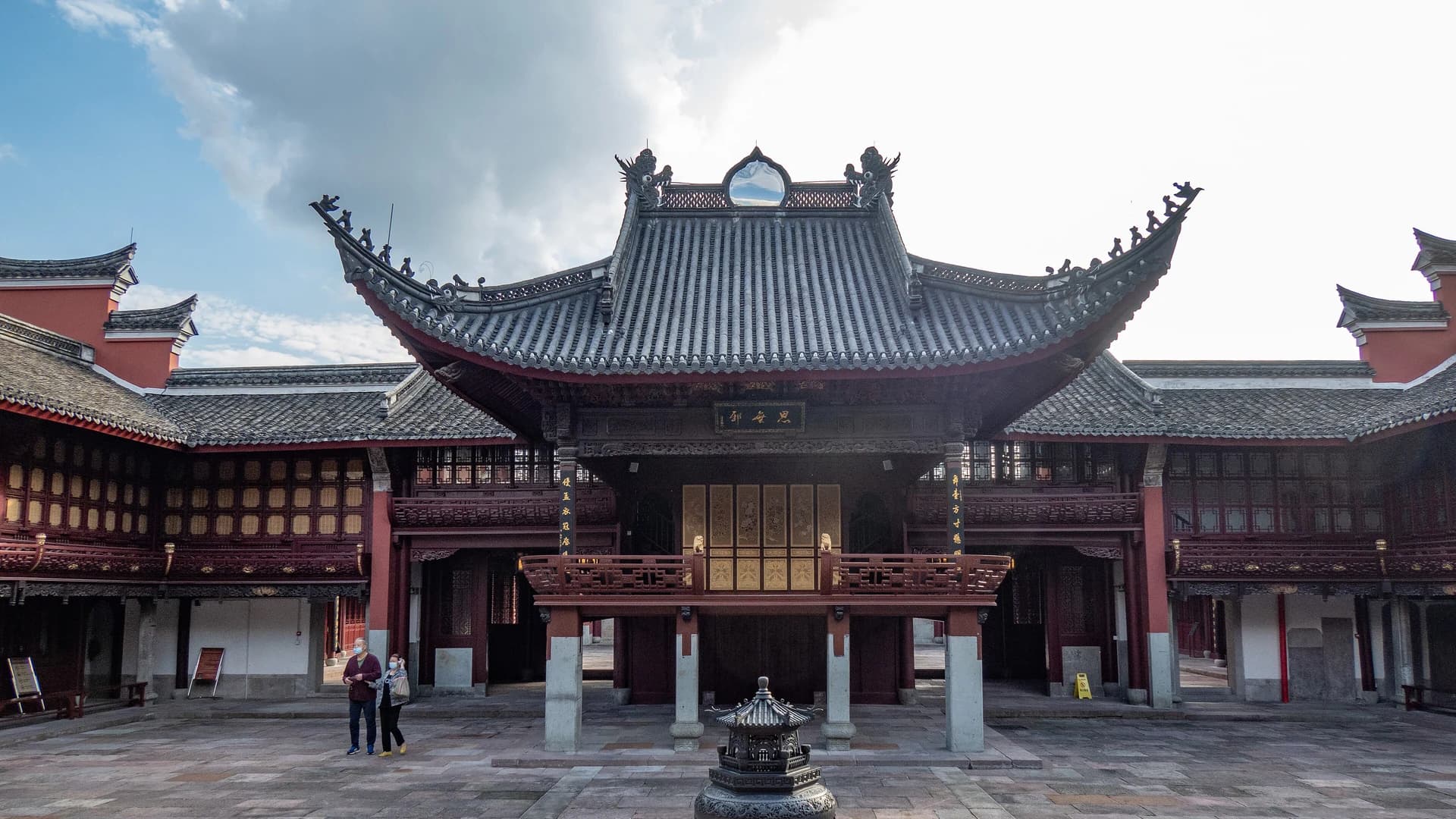
A major Chan Buddhist monastery set against wooded Taibai Mountain, Tiantong links Ningbo to centuries of religious exchange across East Asia.
Practical tips
- Dress modestly, keep voices low and do not interrupt worship, monastic routines or private religious activity for photographs.
- Combine the temple with a gentle woodland visit, but follow current fire-control and trail-access notices.
Hemudu Site Museum
河姆渡遗址博物馆
The archaeological site and museum interpret a Neolithic wetland community known for rice cultivation, wooden architecture, bone tools and distinctive material culture.
Practical tips
- Begin in the museum before walking the site so reconstructed features can be understood through excavated evidence.
- Do not describe Hemudu as a settled UNESCO World Heritage property; Ningbo is still developing the wider archaeological-park and tentative-list work.
Xikou and Xuedou Mountain
溪口与雪窦山
Xikou combines a historic market town and sites associated with Chiang Kai-shek’s family with the waterfalls, temples and steep valleys of Xuedou Mountain.
Practical tips
- Treat the town’s twentieth-century sites as contested modern history, not personality worship, and use multiple perspectives where interpretation is available.
- Keep the mountain as a full-day outing, check current internal transport and closures, and wear shoes suited to wet steps.
Qiantong Ancient Town
前童古镇
In Ninghai County, Qiantong retains lanes, courtyards, canals and clan architecture within a living settlement shaped by the surrounding hills and waterways.
Practical tips
- Allow for a long transfer from central Ningbo and pair the town only with nearby Ninghai stops.
- Keep household entrances clear, ask before photographing residents and avoid presenting ordinary daily life as a staged folk display.
Shipu Fishing Port Old Town
石浦渔港古城
Stone lanes climb above a working harbor in southern Xiangshan, preserving traces of fishery commerce, coastal defense and everyday life beside a modern port.
Practical tips
- Make Shipu a dedicated southern outing or overnight stop; it is too far from central Ningbo for a casual evening add-on.
- Observe harbor activity from public areas, stay out of working quays and boats, and follow current coastal-weather warnings.
Food & dining
Eat with a little local context.
Ningbo cooking balances the sweetness of rice snacks with preserved greens, rice cakes and strongly flavored seafood. Ask what is local and in season, confirm prices by weight before preparation and be cautious with raw-marinated dishes.
Black-sesame tangyuan
宁波汤圆
Soft glutinous-rice dumplings enclose a flowing black-sesame and sugar filling traditionally enriched with pork lard.
Try it this way: The filling is very hot when freshly cooked; ask whether it contains lard if you avoid pork.
Red-roe marinated crab
红膏呛蟹
A classic cold Ningbo dish salt-cures roe-rich swimming crab, preserving a soft texture and pronounced marine flavor.
Try it this way: Because the crab is raw-cured rather than fully cooked, choose a reputable restaurant and skip it if pregnant, immunocompromised or otherwise advised to avoid raw seafood.
Yellow croaker with preserved greens
雪菜大黄鱼
Yellow croaker is cooked with salty, aromatic preserved mustard greens, a combination that expresses Ningbo’s taste for fresh seafood sharpened by fermentation.
Try it this way: Confirm the fish price by weight and watch for fine bones; the preserved greens can make the dish quite salty.
Tofu-skin-wrapped yellow croaker
腐皮包黄鱼
Boneless yellow-croaker filling is wrapped in thin tofu skin and fried until the shell is crisp and the fish remains tender.
Try it this way: Eat it soon after serving and ask whether all fine bones have been removed before giving it to children.
Cicheng rice cakes
慈城年糕
Dense white rice cakes are sliced and stir-fried or simmered with vegetables, preserved greens or seafood, reflecting Ningbo’s deep rice-processing tradition.
Try it this way: Fresh rice cake should be chewy rather than hard; packaged versions need a clear producer and date.
Xikou layered pastry
溪口千层饼
A compact, crisp baked pastry from Xikou builds thin savory-sweet layers, commonly flavored with sesame and moss-like seaweed.
Try it this way: Buy a small fresh portion before committing to gift boxes, and check the packaging date because the texture softens over time.
FAQ
Questions worth answering before you go.
How many days should I spend in Ningbo?
Two days cover the central city and one nearby lake or museum cluster. Allow three to five days for Xikou, Hemudu, Cicheng or the southern coast because the municipality’s major sights are widely separated.
Can I rely on public transport for the whole trip?
Urban rail and buses cover the central city well, while major outlying destinations require separate intercity, regional-bus or licensed-car planning. Verify the current final connection and return time locally instead of using the PDF’s old route numbers.
When is the best time to visit Ningbo?
Spring and autumn usually suit city walking and mountain excursions best. Summer is hot, humid and exposed to typhoon disruptions, while winter can be damp and cool; always check current marine and mountain notices before remote trips.
What should I know before a coastal or seafood day?
Use only officially open beaches and authorized boats, follow typhoon and marine-weather warnings, and stay out of working port areas. For seafood, confirm whether prices are per item or by weight and choose fully cooked dishes if raw products present a health concern.
How should I approach Ningbo’s temples and historic towns?
Dress and speak respectfully in active temples, ask before photographing worship or residents, and follow conservation barriers. In restored old towns, distinguish historic fabric, reconstructed visitor areas and living neighborhoods rather than assuming every building is unchanged.