Last reviewed
Background
A capital repeatedly rebuilt between the Yangtze and Purple Mountain.
Nanjing stands on the lower Yangtze where the Qinhuai River, lakes and low hills create a naturally layered city. Known historically as Jinling, Jiankang and Yingtian, it served as a capital under the Eastern Wu and several Southern Dynasties, the early Ming and the Republic of China, leaving political and architectural traces from very different eras.
The city’s landmarks also carry difficult modern history. The 1937 Nanjing Massacre, republican government, wartime destruction and post-1949 rebuilding cannot be reduced to a picturesque 'old capital' story. Pair imperial and republican sites with the memorial hall, use careful language and give places of mourning the time and conduct they deserve.
Recommended itineraries
Recommended itineraries
Group the city by landscape and historical period: Purple Mountain needs its own day, while the southern wall and Qinhuai connect naturally.
Historic Nanjing
A balanced first route across dynastic, republican and wartime history without compressing memorial visits into sightseeing rush.
- Day 1 · Spend the morning at Zhongshan Mausoleum and the afternoon on the Ming Xiaoling sacred way and tomb landscape, keeping the large Purple Mountain area as the day's only district.
- Day 2 · Visit the Nanjing Massacre Memorial Hall with unhurried attention, then continue to Zhonghua Gate and a section of the Ming city wall before a Qinhuai River and Confucius Temple evening.
- Day 3 · Start around Xuanwu Lake, choose the Presidential Palace or Yuhuatai for another historical layer, then cross toward the Yangtze bridge or Pukou Railway Station only after checking current access.
Essential Nanjing
A compact route that preserves the city's essential contrasts instead of collecting distant secondary sights.
- Day 1 · Zhongshan Mausoleum and Ming Xiaoling, followed by a slower evening around the Qinhuai River and Confucius Temple.
- Day 2 · Nanjing Massacre Memorial Hall, Zhonghua Gate and the city wall, finishing with a restorative walk around Xuanwu Lake.
Attractions & practical tips
What to see—and how to approach it.
Zhongshan Mausoleum
中山陵
The mausoleum of Sun Yat-sen rises along a formal axis on Purple Mountain, combining a monumental stair, blue-tiled republican architecture and long views back toward Nanjing.
Practical tips
- Confirm current real-name reservation and access requirements before traveling to the mountain.
- Allow for extensive stairs, keep voices low near the memorial hall and do not block the central route for photographs.
Ming Xiaoling
明孝陵
The tomb complex of the Hongwu Emperor and Empress Ma uses a long sacred way, stone animals, gates and forested slopes to establish the model for later Ming imperial mausoleums.
Practical tips
- Walk the sacred way and tomb axis rather than treating the site as a single gate or photo stop.
- Pair it with Zhongshan Mausoleum on the same day, but keep enough time for long distances within the mountain district.
Xuanwu Lake
玄武湖
A large urban lake beside the Ming wall whose causeways, islands and public gardens provide a gentler view of Nanjing's relationship with water and city life.
Practical tips
- Walk a limited section rather than trying to circle the whole lake after a full museum day.
- Use managed boats only, follow weather closures and stay clear of water edges during storms.
Qinhuai River and Confucius Temple
秦淮河与夫子庙
The inner Qinhuai passes a reconstructed commercial quarter centered on the Confucius Temple, former examination academy and lanes connected with Nanjing's literary and mercantile history.
Practical tips
- Visit in daylight for architectural context and stay into early evening for the riverfront atmosphere.
- Expect a busy commercial district; agree on prices before optional boat rides and verify the current official boarding point.
Nanjing Massacre Memorial Hall
侵华日军南京大屠杀遇难同胞纪念馆
A museum, memorial and burial-site complex documenting the 1937 Nanjing Massacre through historical evidence, survivor testimony, architecture and spaces for remembrance.
Practical tips
- Reserve enough time to read and reflect; this is not a stop to squeeze between unrelated attractions.
- Dress and behave respectfully, avoid casual selfies or loud conversation and follow all photography restrictions.
Zhonghua Gate and Nanjing City Wall
中华门与南京城墙
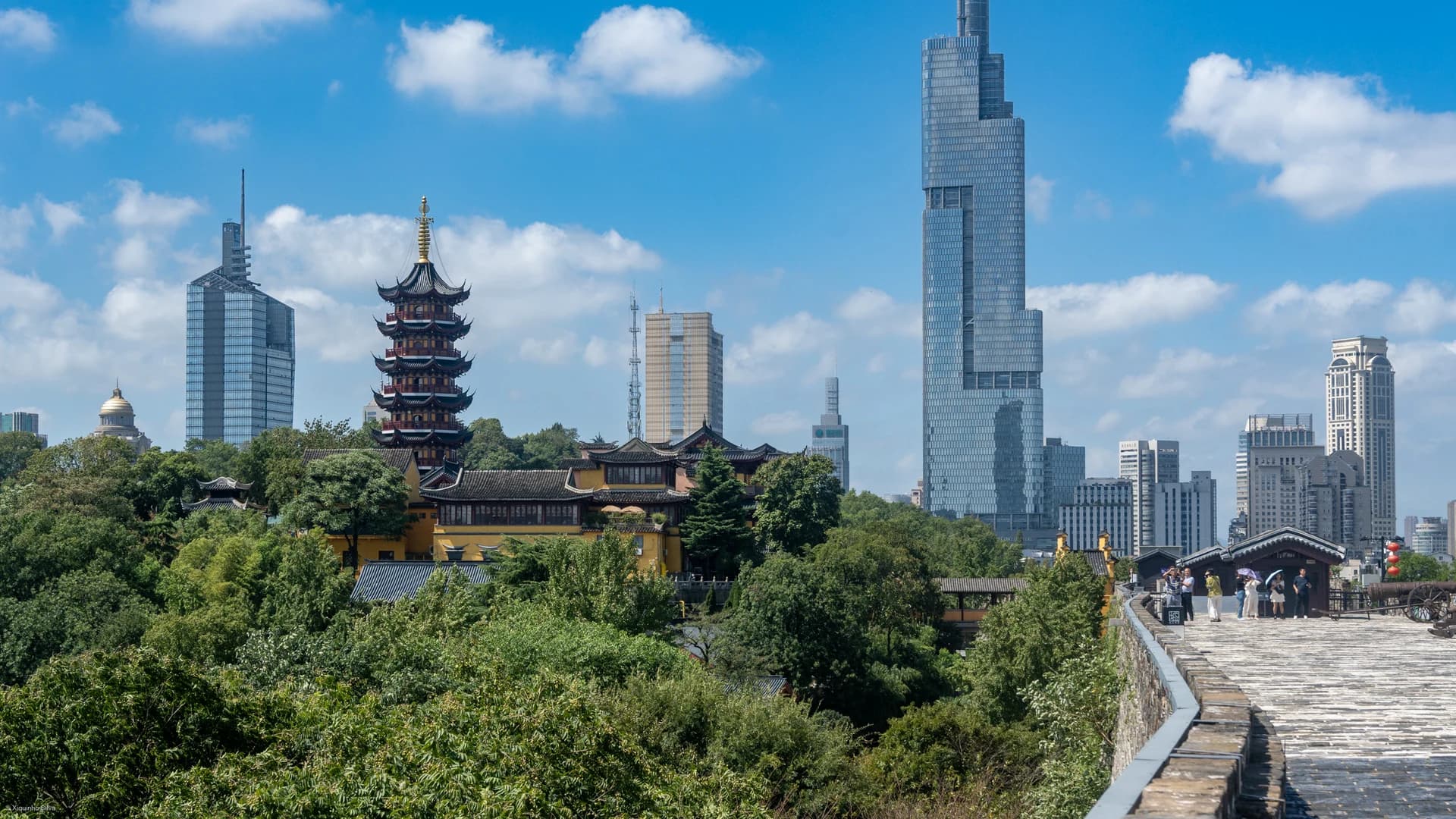
Zhonghua Gate anchors one of the strongest surviving sections of the vast Ming capital wall, with multiple courtyards and massive brickwork demonstrating the city's defensive scale.
Practical tips
- Use the wall to understand Nanjing's geography, then connect on foot toward the southern old city or Qinhuai.
- Confirm which wall sections and gates are currently connected before planning a long continuous walk.
Presidential Palace
南京总统府
A layered administrative complex associated with the Ming, Qing, Taiping Heavenly Kingdom and Republic of China, making the site a compact introduction to several political eras.
Practical tips
- Follow the chronological interpretation rather than treating every room as belonging to the republican period.
- Check current reservation, identity-document and closing-day requirements before arrival.
Yuhuatai
雨花台
A wooded hill and memorial landscape associated especially with people executed there during the republican era, now combining monuments, exhibition spaces and public parkland.
Practical tips
- Approach the memorial areas with quiet respect and distinguish them from the surrounding recreational park.
- Use current interpretation and avoid repeating political slogans from the historical source as neutral fact.
Nanjing Yangtze River Bridge
南京长江大桥
The double-deck road-and-rail bridge opened in 1968 as a major feat of domestic engineering and became an enduring visual symbol of post-1949 Nanjing.
Practical tips
- Use designated public viewpoints and never stop on traffic lanes or railway infrastructure for photographs.
- Confirm current pedestrian and exhibition access, which may differ from the source guide's historical description.
Pukou Railway Station
浦口火车站
The former terminus on the north bank of the Yangtze preserves early twentieth-century railway architecture and associations with modern Chinese transport, literature and political history.
Practical tips
- Public access has changed over time; verify whether the station or surrounding heritage area is open before crossing the river.
- Observe barriers around active or unrestored railway property and do not enter tracks or closed buildings.
Food & dining
Eat with a little local context.
Nanjing's food favors clear, savory flavors, duck in many forms and small Qinhuai snacks. Sample several modest portions rather than following the source's obsolete restaurant list.
Nanjing salted duck
南京盐水鸭
Duck is gently cured and cooked so the meat stays tender and clean-tasting, with osmanthus-season versions traditionally associated with autumn.
Try it this way: Buy from a busy specialist, request a small cut portion and refrigerate packaged duck promptly.
Duck blood vermicelli soup
鸭血粉丝汤
A clear duck broth holds sweet-potato vermicelli, duck blood and often gizzard, intestine, tofu puff, coriander and pickled mustard.
Try it this way: Ask exactly which offal is included and request omissions before the bowl is assembled.
Roast-duck soup buns
烤鸭汤包
Thin wrappers hold minced duck and hot broth in a Nanjing variation on the soup dumpling.
Try it this way: Open a small vent and sip carefully before biting so the hot soup does not spill or burn.
Halal beef potstickers
牛肉锅贴
Crescent-shaped dumplings are fried crisp on one side while retaining a juicy beef filling, a well-known Qinhuai-area snack.
Try it this way: Look for a halal specialist if that matters to you, and allow the filling to cool before the first bite.
Nanjing rice-cake sweets
南京糕团
Small steamed or molded sweets use glutinous rice, beans, nuts and seasonal flavorings, emphasizing soft texture and restrained sweetness.
Try it this way: Share an assortment with tea and check fillings if you have nut or sesame allergies.
Sweet taro soup
桂花糖芋苗
Small taro pieces are simmered into a glossy sweet soup often scented with osmanthus.
Try it this way: Order a small bowl after a savory meal; texture and sweetness can be richer than the portion suggests.
FAQ
Questions worth answering before you go.
How many days should I spend in Nanjing?
Three days supports Purple Mountain, the southern wall and Qinhuai, and a separate memorial and modern-history sequence. Two days can cover the essentials if you leave Pukou and other outer districts for another visit.
When is Nanjing most comfortable?
Spring and autumn generally suit long walks best, though spring rain and autumn holiday crowds require flexibility. Summer can be very hot and humid, while winter is colder and damper than many visitors expect; use a short-range forecast.
How should I visit the Nanjing Massacre Memorial Hall?
Set aside meaningful time, keep voices low, avoid casual or celebratory photography and follow all posted restrictions. Read the historical evidence carefully and do not treat the site as interchangeable with an ordinary museum stop.
Do I need reservations for major sights?
Requirements can change for Zhongshan Mausoleum, the Presidential Palace, memorial museums and special exhibitions. Check current official channels with the passport details requested rather than relying on the source's old free-entry and ticket rules.
What should I know before ordering Nanjing duck dishes?
Duck blood vermicelli soup may contain several kinds of offal, while soup buns contain very hot liquid. Ask about ingredients, halal preparation and allergens before ordering, and start with smaller portions so you can sample more than one dish.