Last reviewed
Background
China’s tropical southwest brings ecology and cross-border culture into one journey.
Xishuangbanna Dai Autonomous Prefecture sits in far southern Yunnan along the upper Mekong, known in China as the Lancang River. Jinghong is the practical base, while rainforest reserves, botanical collections and rural communities extend across a broad tropical region.
Dai, Hani, Jino, Bulang and other communities shape the prefecture’s architecture, food and festivals. Visitors should distinguish lived religious and village spaces from commercial performances, ask before photographing people and avoid treating minority identity as a costume display.
Recommended itineraries
Recommended itineraries
Use Jinghong for the urban first day, then dedicate separate days to the botanical garden and a second forest or community landscape.
Jinghong and tropical plants
A compact introduction to Dai cultural context and the prefecture’s extraordinary plant diversity.
- Day 1 · Explore Manting Park, a respectful religious or cultural stop and Jinghong’s evening food scene.
- Day 2 · Make the Xishuangbanna Tropical Botanical Garden the main excursion and allow enough time for its large collections.
Forest, gardens and communities
A better-paced route balancing Jinghong with two contrasting excursions.
- Day 1 · Visit Manting Park and one city cultural site, then sample the evening food scene without turning it into a staged checklist.
- Day 2 · Spend the day at the tropical botanical garden, focusing on a few themed areas rather than rushing the whole site.
- Day 3 · Choose Wild Elephant Valley, Dai Ethnic Garden or a responsibly interpreted community visit according to your interests and current conditions.
Attractions & practical tips
What to see—and how to approach it.
Xishuangbanna Tropical Botanical Garden
西双版纳热带植物园
A vast research garden at Menglun displaying tropical plant diversity across themed collections and forested landscapes.
Practical tips
- Choose priority sections before entering because the garden is too large for a meaningful quick circuit.
- Carry sun and rain protection; tropical weather can change quickly even on a planned indoor-outdoor route.
Wild Elephant Valley
野象谷
A forest reserve and visitor area within Asian-elephant habitat north of Jinghong.
Practical tips
- Wild elephant sightings are never guaranteed; visit for the habitat rather than expecting an encounter.
- Keep a safe distance from all animals and do not support handling, forced performances or feeding outside current conservation guidance.
Manting Park
曼听公园
A long-established park in Jinghong combining tropical planting, Dai architectural elements and open public space.
Practical tips
- Visit by day for the gardens; treat evening performances as a separate ticketed experience whose program may change.
- Pair it with nearby city sights rather than crossing the prefecture for a single park stop.
Mengle Great Buddhist Monastery
勐泐大佛寺
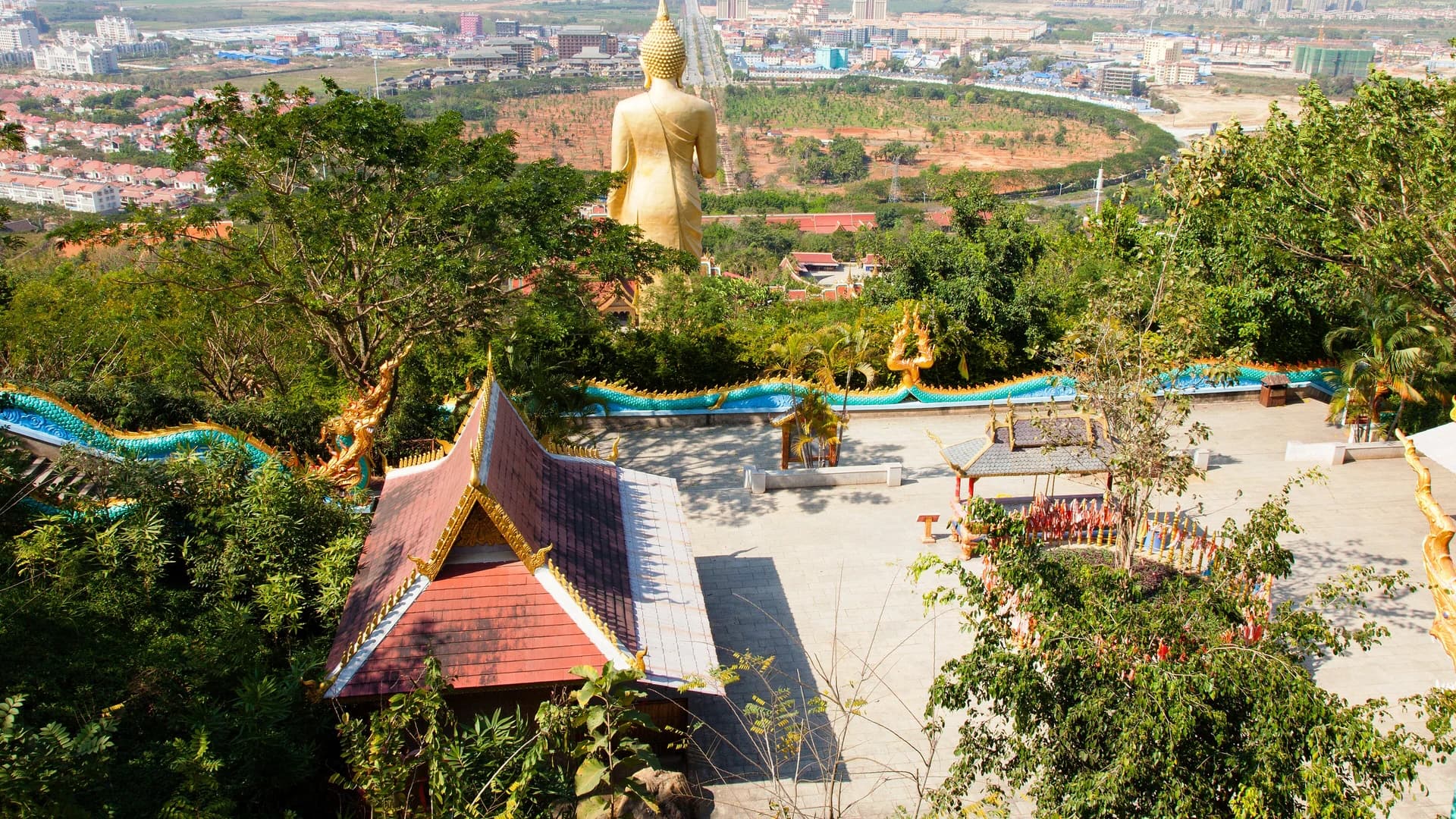
A hill-backed Theravada Buddhist complex overlooking Jinghong and introducing the region’s religious architecture.
Practical tips
- Dress modestly, keep voices low and follow restrictions around worship areas.
- Do not confuse a visitor presentation with the full diversity of local Buddhist practice.
Dai Ethnic Garden
傣族园
A managed visitor area incorporating several Dai villages, temples, bamboo architecture and scheduled cultural activities.
Practical tips
- Separate residents’ daily space from staged activity areas and ask before photographing people.
- Check the current program if a water-splashing activity matters to you; do not assume it runs continuously.
Jino Mountain community visit
基诺山寨
A visitor-focused introduction to Jino history, food, music and community traditions in the hills northeast of Jinghong.
Practical tips
- Choose interpretation that centers local voices and contemporary life, not claims that a community is frozen in the past.
- Ask before photographing residents and avoid buying wildlife, medicinal or craft products of uncertain origin.
Food & dining
Eat with a little local context.
Xishuangbanna food combines sticky rice, grilled meats and fish, herbs, sour-spicy flavors and abundant tropical fruit. Night markets offer variety, but food safety and respectful curiosity matter more than eating every unusual item.
Dai-style grilled fish
傣味烤鱼
Whole fish is grilled with aromatic herbs, chilli and sour notes characteristic of Dai cooking.
Try it this way: Confirm the fish is cooked through and ask for chilli separately if you prefer a gentler first taste.
Sticky rice
糯米饭
Glutinous rice accompanies grilled and herb-rich dishes and may be served plain, colored or inside bamboo.
Try it this way: Use a small portion as the base for several shared dishes rather than ordering it as a sweet dessert.
Lemongrass grilled chicken
香茅草烤鸡
Chicken is seasoned with lemongrass and local aromatics, then grilled for a smoky, citrus-led flavor.
Try it this way: Order it with vegetables and rice, and confirm the portion before adding other grilled meats.
Tropical fruit
热带水果
Markets carry mango, pineapple, banana and other fruit shaped by the prefecture’s warm climate.
Try it this way: Choose fruit that is cut in front of you with clean tools, or buy whole fruit you can peel yourself.
FAQ
Questions worth answering before you go.
How many days do I need in Xishuangbanna?
Two days cover Jinghong and one major excursion. Three days provide a better balance between the botanical garden, forest habitat and community context without spending the whole trip in transfers.
Where should I base myself?
Jinghong is the practical base for transport, food and city sights. Some major attractions are in other counties, so check the exact travel time before booking an early activity or late return.
Will I definitely see wild elephants?
No. They range freely and sightings depend on season, movement and luck. A responsible visit values habitat and conservation even when no elephants appear.
How can I visit villages respectfully?
Use locally led interpretation, distinguish homes from performance areas and ask before taking portraits. Do not repeat outdated claims that communities are primitive or unchanged; people and traditions are contemporary and diverse.