Last reviewed
Background
A highland city where Tibetan culture and northwest Yunnan’s landscapes meet.
Shangri-La is the principal city of Diqing Tibetan Autonomous Prefecture in northwest Yunnan. Its modern name draws on James Hilton’s fictional valley, but the real destination is grounded in Tibetan communities, the old Tea Horse Road and a high plateau of grassland, forest and mountain lakes.
Dukezong Old Town and Songzanlin Monastery provide the cultural core, while Napa Lake and Pudacuo extend the visit into a wider highland ecosystem. Approach monasteries and villages as living religious and residential places, not visual backdrops, and leave generous time for elevation and long distances.
Recommended itineraries
Recommended itineraries
Use the first day for a gentle city introduction, then add one major landscape per day.
Old town, monastery and plateau
A measured first visit that avoids scheduling the most demanding excursion immediately after arrival.
- Day 1 · Settle in, walk Dukezong Old Town at an easy pace and visit Songzanlin Monastery with time to observe active religious life respectfully.
- Day 2 · Choose Pudacuo for forest and lake scenery or Napa Lake for a shorter grassland and wetland outing.
Shangri-La landscapes
A fuller route through the city’s cultural core and two contrasting highland environments.
- Day 1 · Explore Dukezong and Songzanlin Monastery without adding a long transfer.
- Day 2 · Make Pudacuo the day’s principal landscape and follow only currently open trails.
- Day 3 · Choose Napa Lake, Baishuitai or Balagezong according to season, road conditions and how you are adapting to the altitude.
Attractions & practical tips
What to see—and how to approach it.
Dukezong Old Town
独克宗古城
A historic Tibetan settlement on the old Tea Horse Road, rebuilt in part after fire and centered on lanes, homes and the hilltop Guishan Park.
Practical tips
- Walk slowly on the slopes, especially on your first day at elevation.
- Keep voices low near homes and religious spaces, and ask before photographing residents.
Songzanlin Monastery
松赞林寺
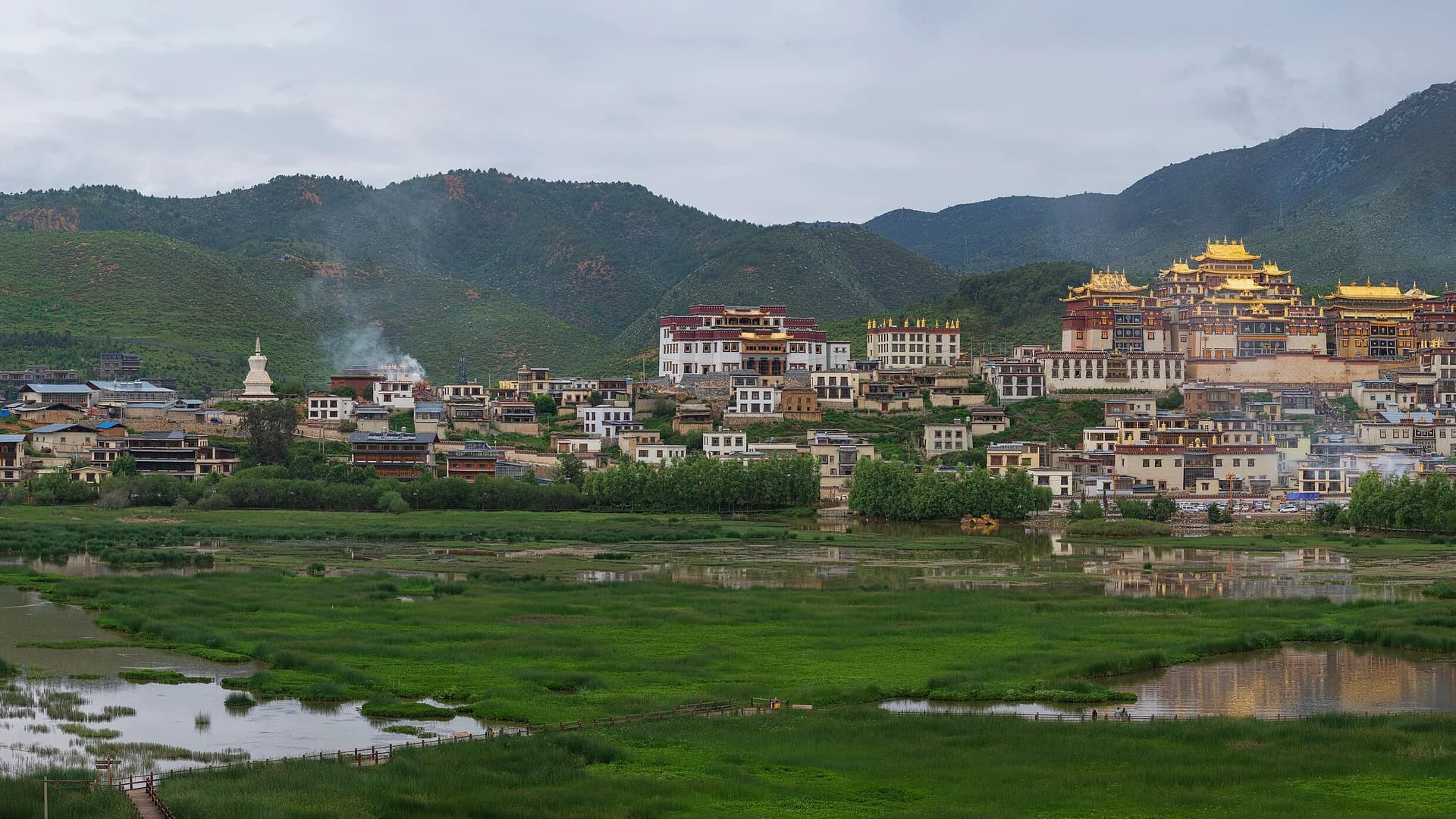
Yunnan’s largest Tibetan Buddhist monastery complex rises above the northern edge of the city with layered halls, courtyards and active monastic life.
Practical tips
- Dress modestly, follow the clockwise flow where requested and obey all photography restrictions.
- Allow worshippers priority and do not enter residential or ritual areas that are closed to visitors.
Pudacuo National Park
普达措国家公园
A protected highland landscape of forest, meadows, wetlands and lakes southeast of the city.
Practical tips
- Check which trails and scenic zones are open before departure; conservation access changes.
- Carry layers and pace the walking because weather and elevation can make a short route feel demanding.
Napa Lake and Yila Grassland
纳帕海与依拉草原
A seasonal wetland and grassland northwest of the city whose balance of water, pasture and birdlife changes markedly through the year.
Practical tips
- Visit for the changing highland landscape rather than expecting the same water level in every season.
- Confirm the route and any horse-riding terms before agreeing to an activity.
Baishuitai
白水台
White mineral terraces below Haba Snow Mountain form a distinctive calcite landscape with deep cultural importance to local Naxi Dongba traditions.
Practical tips
- Treat the long road journey as part of a dedicated day and verify current conditions before leaving.
- Stay on marked paths to protect the fragile terraces and avoid slippery mineral surfaces.
Balagezong Grand Canyon
巴拉格宗大峡谷
A remote canyon landscape of steep walls, highland settlements and mountain scenery west of Shangri-La.
Practical tips
- Confirm current transfers and the day’s internal route because the area is distant and highly managed.
- Do not combine it with another major excursion on the same day.
Food & dining
Eat with a little local context.
Highland ingredients and Tibetan food traditions shape Shangri-La’s meals. Try dairy, barley and yak dishes in simple preparations, and keep alcohol modest while adapting to elevation.
Butter tea
酥油茶
Strong tea churned with butter and salt creates a rich, savory highland drink.
Try it this way: Try a small cup first; its salty flavor and substantial texture differ from sweet milk tea.
Tsampa
糌粑
Roasted barley flour is mixed into a compact staple, often with tea or dairy.
Try it this way: Ask your host or server to show the intended texture rather than adding all the liquid at once.
Yak meat
牦牛肉
Yak appears in braises, soups and dried preparations suited to the highland environment.
Try it this way: Begin with a shared braised or stewed dish if you are unfamiliar with the firmer texture.
Yak-milk curd and cheese
奶渣与奶酪
Fresh or dried curds preserve local dairy and range from gently tart to strongly concentrated.
Try it this way: Try a small portion before buying dried dairy products, whose flavor is much stronger.
FAQ
Questions worth answering before you go.
How long should I stay in Shangri-La?
Two days cover Dukezong, Songzanlin and one nearby landscape. Three days are better if you want Pudacuo plus another longer outing without making every day a road transfer.
How should I plan for the elevation?
Keep the first day easy, limit heavy exertion and stop ascending if you feel unwell. Do not rely on herbal supplements as a substitute for medical advice, and seek help for serious or worsening symptoms.
Can I combine several scenic areas in one day?
Usually not well. Pudacuo, Baishuitai and Balagezong each involve meaningful travel and walking. Choose one major landscape per day and verify current roads, transfers and access.
What etiquette matters at monasteries and villages?
Dress modestly, follow posted walking directions, do not touch ritual objects and ask before photographing people. Avoid reducing Tibetan beliefs or family life to stereotypes; local instructions take priority.