Last reviewed
Background
A plateau capital where karst terrain, migration and everyday food culture meet.
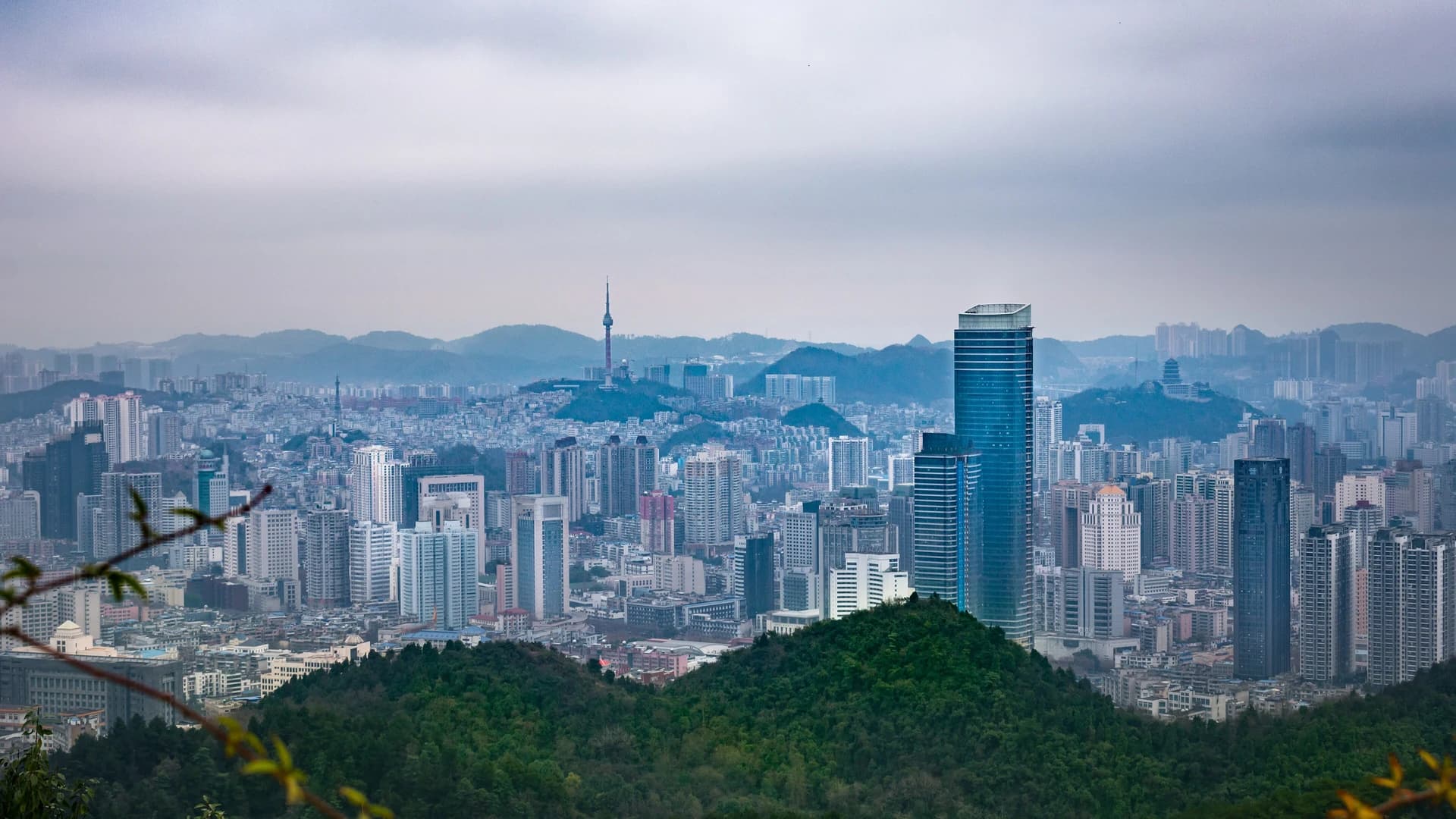
Guiyang sits on the central Guizhou plateau, where hills, basins, caves, underground water and the Nanming River shape both the city and its outer districts. Its relatively mild summers made the provincial capital known as a seasonal retreat, but rain, cloud and rapid temperature changes are equally characteristic. The result is a green city whose urban parks and nearby karst landscapes belong to the same geography.
Guiyang became Guizhou’s political and administrative center in the Ming period and today works as the province’s main transport and cultural gateway. Central landmarks, Qingyan’s fortified streets, the Wang Yangming sites in Xiuwen and the memorial landscape at Xifeng reveal different layers of that history. Markets, tea tables and foods built around fermented sour flavors, chile and local starches keep the guide grounded in present-day life rather than treating the city only as a departure point.
Recommended itineraries
Recommended itineraries
Keep the compact center and the southern Huaxi sights in separate blocks. Qingzhen, Xiuwen and Xifeng are outer-municipality trips, not quick stops between downtown landmarks.
Central Guiyang and the Huaxi south
A first visit pairing the central city’s landscape and architecture with one focused karst-and-old-town day.
- Day 1 · Walk Qianling Mountain Park in the morning, keeping a safe distance from macaques, then return to the Nanming River for Jiaxiu Tower. Finish with a small food circuit built around noodles, tofu or siwawa rather than trying to cross the municipality again.
- Day 2 · Choose Tianhetan first if caves and waterfalls are the priority, then continue to Qingyan Ancient Town. Add Huaxi’s park and wetland only when daylight and energy allow; otherwise give Huaxi a separate half-day.
One northern history day
Choose one substantial historical destination north of central Guiyang instead of combining distant memorials into a hurried transfer day.
- Xifeng option · Give the former prison site and its renovated memorial exhibition the time and quiet attention they require. Check the current reservation method and return transport before leaving central Guiyang.
- Xiuwen option · Visit China Yangming Cultural Park for Yangming Cave, Longgang Academy and interpretation of Wang Yangming’s years in Longchang. Treat the expanded modern park and the protected historic remains as related but distinct layers.
Attractions & practical tips
What to see—and how to approach it.
Qianling Mountain Park
黔灵山公园
A forested mountain park northwest of the center combines walking paths, Qianling Lake, Hongfu Temple and broad city views in one of Guiyang’s most accessible green spaces.
Practical tips
- Choose a loop that matches your fitness and allow extra time for wet stone steps after rain; the lake, temple and higher viewpoints do not need to be rushed into one climb.
- Macaques are wild animals. Never feed, touch, corner or pose beside them; keep food packed away, give them space and follow staff instructions.
Jiaxiu Tower
甲秀楼
Guiyang’s best-known historic landmark rises above the Nanming River on a stone outcrop, joined to the banks by the Fuyu Bridge and framed by the older river-city landscape.
Practical tips
- Visit once in daylight to read the bridge, tower and river relationship; return after dark only if you want the illuminated exterior.
- Check current interior access and temporary closures on arrival. The riverside setting remains worthwhile even when individual rooms are unavailable.
Guiyang Forest Park
贵阳森林公园
Wooded hills southeast of the center provide a quieter city-edge landscape of mixed forest, seasonal flowers and walking paths.
Practical tips
- Use current entrances and marked public trails because old approaches and bus details in the source are no longer reliable.
- Wear shoes for damp ground, carry out all litter and observe birds or small wildlife without feeding or leaving the path.
Qingyan Ancient Town
青岩古镇
Founded as a Ming military settlement south of Guiyang, Qingyan retains stone lanes, walls, gates, temples, ancestral buildings and a layered mix of religious and commercial heritage.
Practical tips
- Leave the busiest shopping lanes for side streets and elevated wall views, but respect residential thresholds and any worship in active religious buildings.
- Pair the town with Huaxi or Tianhetan, not with a distant northern excursion. Check the current ticket scope because access to individual compounds may vary.
Red Maple Lake
红枫湖
A large reservoir landscape in Qingzhen combines islands, wooded shorelines, coves, caves and broad plateau-lake views west of central Guiyang.
Practical tips
- Confirm which public zones, boats and shoreline routes are operating before making the trip; the scenic area is too spread out to navigate from an old map.
- Treat staged cultural compounds carefully and prefer interpretation led by the communities represented. Never assume costume, performance or architecture stands for all Miao, Dong or Bouyei life.
Tianhetan
天河潭
This managed Huaxi landscape concentrates karst caves, waterfalls, pools, canyons and a natural bridge within a developed scenic area southwest of central Guiyang.
Practical tips
- Decide in advance whether you want the cave circuit, waterfall landscape or a shorter surface visit; bundled access and internal transport can change.
- Cave floors and waterside steps can be wet and low-light. Wear shoes with grip, use the managed route and check weather or closure notices before departure.
Huaxi National Urban Wetland Park
花溪国家城市湿地公园
A long green corridor south of the center links Huaxi Park, Shili River Beach and the Pingqiao landscape through water, karst terrain, gardens and everyday recreation.
Practical tips
- Choose one section instead of trying to cover the full wetland corridor. Huaxi Park and Pingqiao make a manageable first visit.
- Keep off planted and wetland protection zones, do not collect plants or disturb birds, and use current signs after heavy rain or high water.
Xifeng Concentration Camp Revolutionary History Memorial Hall
息烽集中营革命历史纪念馆
This former Kuomintang secret prison and its museum document political detention, torture, resistance and the deaths or disappearance of many prisoners between 1938 and 1946.
Practical tips
- Approach the former cells and memorial exhibition as a site of suffering, not a themed attraction: keep voices low and avoid playful or staged photographs.
- The exhibition was recently renovated, so use current official reservation, closure and transport information rather than the source’s old operating details.
China Yangming Cultural Park
中国阳明文化园
The Xiuwen complex centers on Yangming Cave, where the Ming thinker Wang Yangming lived and taught, together with Longgang Academy, historic inscriptions and a modern interpretive park.
Practical tips
- Begin with the protected cave, academy and inscriptions before the newer monumental spaces; interpretation is essential for understanding Wang’s idea of the unity of knowledge and action.
- The site is outside central Guiyang. Check current access and return transport and give it a focused half-day rather than treating it as a roadside photograph.
Xiangzhigou
香纸沟
A rural valley landscape in Wudang District combines streams, wooded hills and a local tradition associated with handmade paper production.
Practical tips
- Confirm that the heritage demonstration and public scenic route are operating before traveling; do not rely on the source’s former shuttle, price or opening details.
- Ask before entering workshops or photographing residents, keep away from working equipment and avoid unmarked riverside or forest paths after rain.
Food & dining
Eat with a little local context.
Guiyang cooking often balances fermented sourness, chile, savory broths and contrasting textures. Order by dish rather than relying on decade-old restaurant lists.
Sour soup fish
酸汤鱼
Fresh fish is cooked in a bright fermented sour broth often built from tomato, red chile and regional aromatics, producing one of Guizhou’s defining shared dishes.
Siwawa vegetable wraps
丝娃娃
Thin flour wrappers hold shredded vegetables, crisp soybeans and other fillings before a chile-forward dipping liquid is spooned into the parcel.
Fried tofu balls
豆腐圆子
These fried tofu rounds pair a crisp golden exterior with a soft center and are commonly served with a dipping mix of pickled radish, houttuynia and chile.
Bean hotpot
豆米火锅
A thick red-bean base cooks down to a creamy, savory broth, often enriched with crisp pork and accompanied by vegetables and other hotpot additions.
Changwang noodles
肠旺面
Springy egg noodles arrive in a red, savory broth with pork intestine, blood curd, bean sprouts and crisp pork, balancing richness with chile and aromatic oil.
Qingyan braised pig trotter
青岩卤猪脚
Slow-braised pig trotter is a signature Qingyan snack, valued for its aromatic seasoning, glossy skin and soft texture.
FAQ
Questions worth answering before you go.
How many days should I spend in Guiyang?
Two days cover Qianling Mountain, Jiaxiu Tower and one Huaxi-side circuit. Add a third or fourth day for Qingzhen, Xiuwen or Xifeng. Do not use Guiyang’s provincial transport role as a reason to combine Huangguoshu, Zunyi and the city into one rushed itinerary.
What should I pack for Guiyang’s weather?
Bring a light waterproof layer, shoes with grip and an extra layer for cool mornings, evenings and caves. Plateau weather can change quickly, and wet stone, stairs and karst paths matter more than an old monthly temperature table.
Is all Guiyang food very spicy?
No, but chile, fermented sour flavors, pork and offal are common. Ask for less chile before cooking, confirm the broth and garnish, and name allergies clearly. Siwawa, tofu dishes and rice or noodle snacks can be adjusted more easily than a shared hotpot, though vegetarian-looking dishes may still use lard or meat stock.
Can I feed or photograph the macaques at Qianling Mountain?
Photograph only from a respectful distance and never feed, touch, tease or block a macaque. Keep food sealed, secure loose items, supervise children and move away calmly if an animal approaches. Feeding changes wild behavior and increases conflict.
Which outer sights combine well in one day?
Tianhetan, Qingyan and Huaxi belong to the southern side, although all three can still be too much for a relaxed day. Red Maple Lake lies west in Qingzhen, while Yangming Cultural Park and Xifeng are separate northern trips. Use current map times and reserve one geographic direction per day.