Last reviewed
Background
A tropical port city shaped by migration, trade and everyday street life.
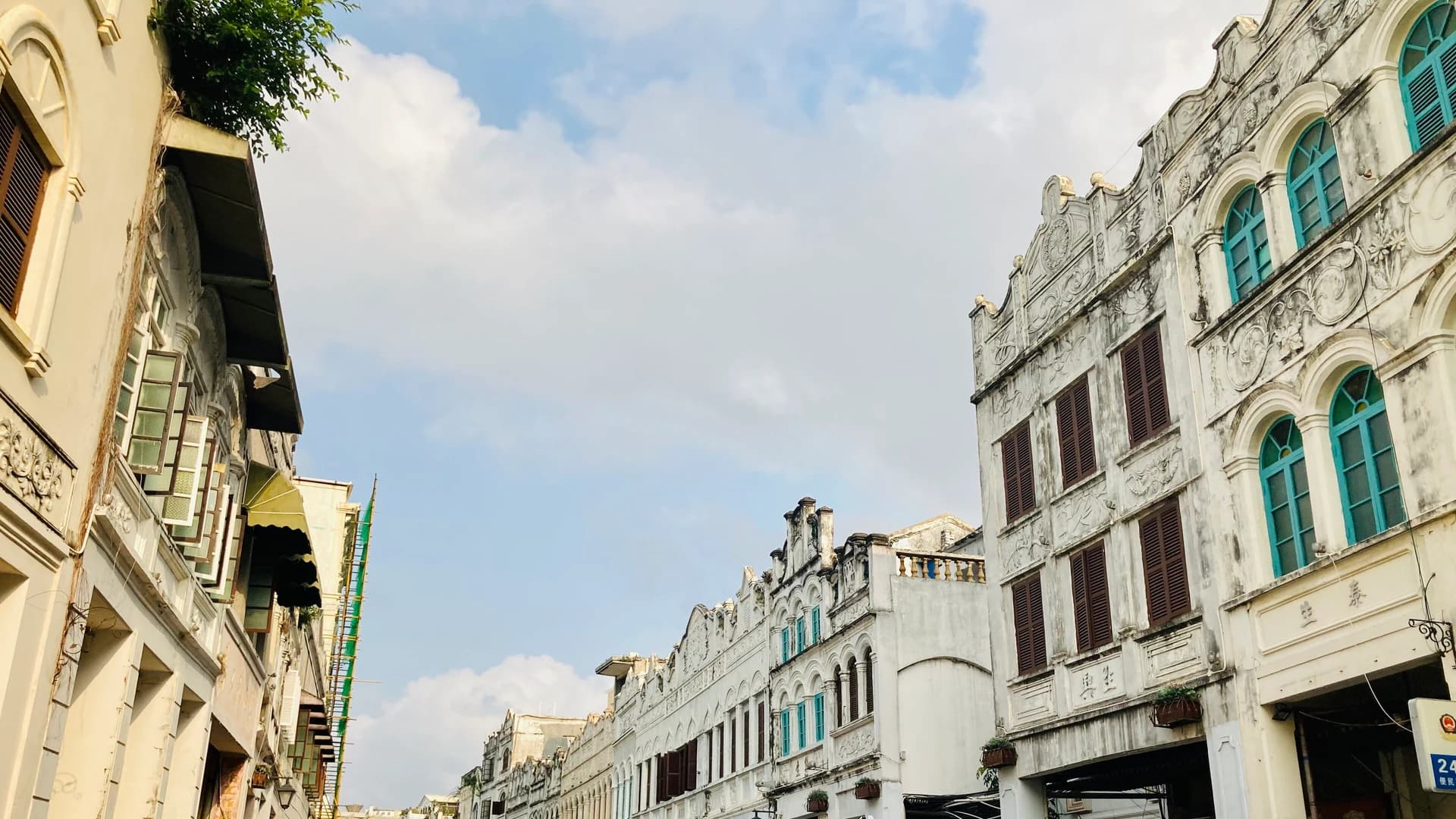
Haikou is Hainan’s provincial capital and the island’s main northern gateway across the Qiongzhou Strait. Its modern identity grew from port trade, migration and connections with Southeast Asia; Qilou’s covered arcades record how overseas Hainanese influences, local craft and a climate-adapted commercial streetscape came together.
Beyond the arcaded center, Haikou’s municipality reaches into Quaternary volcanic terrain, traditional basalt villages, mangrove wetlands and the exposed north coast. Morning laobacha, rice noodles and late-day public parks make the city useful not only as an arrival hub but as a place to understand how northern Hainan is lived.
Recommended itineraries
Recommended itineraries
Keep central Haikou, the western volcanoes and the eastern mangroves in separate geographic blocks. Current weather, museum reservations and reserve access should set the final order.
Arcades, museums and local rhythms
A city-focused first visit combining port architecture, Hainan history and the social ritual of laobacha.
- Day 1 · Walk Qilou Old Street and the lanes around the Clock Tower, distinguishing restored façades from working commercial streets. Stop for Hainan noodles or laobacha, then finish in a public waterfront or city park.
- Day 2 · Visit the Five Officials Temple and Hainan Museum, adding Qiongtai Academy only if current access and your pace allow. Keep the evening open for a relaxed local meal rather than a commercial show.
City, volcano and mangrove coast
A broader Haikou route that gives its geological and wetland landscapes the time they require.
- Day 1 · Explore Qilou Old Street, the Clock Tower and one laobacha stop.
- Day 2 · Visit the Five Officials Temple and Hainan Museum, adding nearby Qiongtai Academy only if current access and your pace allow.
- Day 3 · Spend the day at the Haikou section of Leiqiong UNESCO Global Geopark, using managed paths and adding a volcanic village only through a current public route.
- Day 4 · Choose Dongzhai Port for a conservation-led mangrove visit or the west coast for a weather-safe walk; do not compress both sides of the municipality into the same day.
Attractions & practical tips
What to see—and how to approach it.
Qilou Old Street and Haikou Clock Tower
骑楼老街与海口钟楼
A network of colonnaded commercial streets links Southeast Asian, European, Lingnan and local building traditions, while the nearby Clock Tower recalls Haikou’s growth as a trading port.
Practical tips
- Walk beyond the restored Zhongshan Road frontage into public side streets, but keep residential doorways and working shop entrances clear.
- Look up at arcades, ventilation, stucco and roof details, and use current on-site interpretation for the age and restoration history of individual buildings.
Five Officials Temple
五公祠
A complex of halls, gardens, springs and memorial spaces associated with officials exiled to Hainan, giving political exile and the island’s relationship with imperial China a tangible setting.
Practical tips
- Read the individual memorial stories rather than treating every structure and object as one period.
- Check current restoration, museum and reservation arrangements before arrival rather than relying on old ticket or transport details.
Hainan Museum
海南省博物馆
The provincial museum connects Hainan’s archaeology, maritime exchange, island history, crafts, performing arts and living cultural traditions through permanent and changing exhibitions.
Practical tips
- Start here if Haikou is your first stop on the island; the displays give context that improves later visits across Hainan.
- Use the museum’s current official channel for real-name entry, opening notices and exhibition changes.
Leiqiong Haikou Volcanic Cluster
雷琼海口火山群世界地质公园
The Haikou sector of Leiqiong UNESCO Global Geopark preserves volcanic cones, lava flows, caves, tropical vegetation and villages adapted to basalt landscapes.
Practical tips
- Use developed paths and interpretation around the Ma’an Mountain scenic area; never enter lava tubes, caves or village property without authorized access.
- Carry water and sun protection, and avoid exposed paths during thunderstorms, intense heat or typhoon conditions.
Dongzhai Port mangroves
东寨港红树林
China’s first national nature reserve centered on mangrove wetlands protects a rich tidal ecosystem of mangrove species, birds, fish and invertebrates east of central Haikou.
Practical tips
- Visit only through currently authorized public zones and regulated operators; reserve protection rules take priority over sightseeing.
- Keep distance from birds and tidal wildlife, do not feed or collect anything, and never enter mudflats or mangrove channels independently.
Qiongtai Academy
琼台书院
Founded in the Qing period, this academy complex is associated with Hainan’s educational history and the memory of the scholar-official Qiu Jun.
Practical tips
- Look for courtyard planning and the relationship between teaching spaces, halls and gardens rather than visiting only for a staged story.
- Confirm current visitor access because parts of the site or surrounding educational campus may have changing controls.
Hai Rui Memorial
海瑞文化公园
The memorial landscape around the Ming official Hai Rui uses tomb architecture, sculpture and exhibitions to explore a figure remembered for outspoken criticism and administrative integrity.
Practical tips
- Read the current historical interpretation instead of reducing Hai Rui to a single moral nickname.
- Treat the tomb and memorial axis respectfully, keep off protected stonework and check current construction or access notices.
Xiuying Fort
秀英炮台
A late-Qing coastal-defense site whose gun emplacements and supporting structures record Hainan’s response to imperial pressure and maritime conflict.
Practical tips
- Approach the site as military and unequal-treaty history rather than romantic ruins.
- Check which structures are open, watch for uneven surfaces and never climb artillery or protected masonry.
Holiday Beach and the west coast
假日海滩与西海岸
Haikou’s western shoreline offers long sea views, palms, public paths and sunset light along the Qiongzhou Strait, with conditions less sheltered than a resort lagoon.
Practical tips
- Treat swimming and water sports as conditional: use only staffed, open zones and obey flags, lifeguards, lightning, tide and typhoon notices.
- Do not rely on blanket assurances about marine hazards or shallow water; check the actual sea state and official warnings on the day.
Evergreen Park
万绿园
A large public green space on Haikou Bay where palms, lawns and waterfront paths provide a lived-in counterpoint to the city’s formal heritage sites.
Practical tips
- Visit in the cooler morning or late afternoon and observe how residents use the park for walking, exercise and social time.
- Use shade, hydration and sun protection, and avoid open waterfront areas during lightning or tropical-storm warnings.
Food & dining
Eat with a little local context.
Haikou’s food culture is strongest in ordinary breakfast shops, arcaded streets, teahouses and neighborhood kitchens. Rice, coconut, pork and seafood recur, while laobacha turns eating into a long social pause rather than a hurried checklist.
Laobacha
老爸茶
Haikou’s everyday teahouse ritual pairs tea or coffee with buns, pastries, noodles and small savory plates, often over a long conversation.
Try it this way: Choose a busy neighborhood shop, point or order in small rounds, and do not assume every item arrives together; the relaxed pace is part of the experience.
Hainan noodles
海南粉
Fine rice noodles are mixed with a savory sauce and toppings such as peanuts, sesame, preserved vegetables, meat and fried shallots, with recipes varying by shop.
Try it this way: State peanut, sesame, soy or meat restrictions before ordering; mix the bowl thoroughly and add broth only if that is how the shop serves it.
Qingbuliang
清补凉
A chilled Hainan dessert combines coconut milk or sweet liquid with ingredients such as beans, barley, fruit, taro, jelly and small tapioca pearls.
Try it this way: Ask what is in the day’s bowl because peanuts, dairy, coconut and sweetened toppings vary; choose a clean, high-turnover stall.
Coconut rice
椰子饭
Glutinous rice is steamed inside or with coconut flesh and coconut water, creating a gently sweet, chewy dish that may be served as a snack or shared plate.
Try it this way: Order a small portion for sharing and ask whether added sugar, dairy or other fillings are used.
Ximen spiced pork trotters
西门猪脚
A Haikou specialty centered on richly seasoned pork trotters, with soft meat, skin and tendon served as a substantial local dish.
Try it this way: Expect skin, fat and small bones; order a modest portion and pair it with rice, greens or a lighter side.
Dongzhai mixed fish casserole
东寨港杂鱼煲
Small locally landed fish are simmered into a savory casserole associated with the Dongzhai Port area east of central Haikou.
Try it this way: Use a licensed, busy kitchen; confirm the fish, unit price and portion before cooking, request it fully cooked and watch carefully for bones.
FAQ
Questions worth answering before you go.
How many days do I need in Haikou?
Two days cover Qilou, the main cultural sites and local food at a comfortable pace. Add one day for the volcanic cluster and another for Dongzhai Port or the west coast; each outer area deserves its own weather-aware block.
When is Haikou most comfortable to visit?
The cooler, relatively drier part of the year is often easiest for long walks, but Haikou remains warm and humid and short-term conditions matter more than a fixed promise. Summer and autumn can bring intense heat, heavy rain and typhoons, so monitor official forecasts and transport notices.
What should I pack for the tropical climate?
Bring breathable quick-drying clothing, reliable sun protection, a light rain layer and shoes that grip on wet stone. A light outer layer can help in strong air-conditioning or a cool winter spell; use current forecasts instead of assuming shorts alone are sufficient.
What safety and conservation rules matter on the coast?
Swim or join water activities only in currently open, staffed zones and obey tide, lightning, wind and typhoon closures. At Dongzhai Port, stay in authorized visitor areas, keep distance from wildlife and never enter mudflats, collect organisms or use an informal boat.
What should I know before eating seafood and local snacks?
Choose high-turnover licensed kitchens, confirm seafood species, unit price and weight, and request shellfish and fish fully cooked. Hainan noodles and desserts may contain peanut, sesame, coconut, dairy or soy; state allergies clearly and treat folk rules about food combinations as culture, not medical advice.