Last reviewed
Background
A modern Xinjiang gateway shaped by distance and exchange.
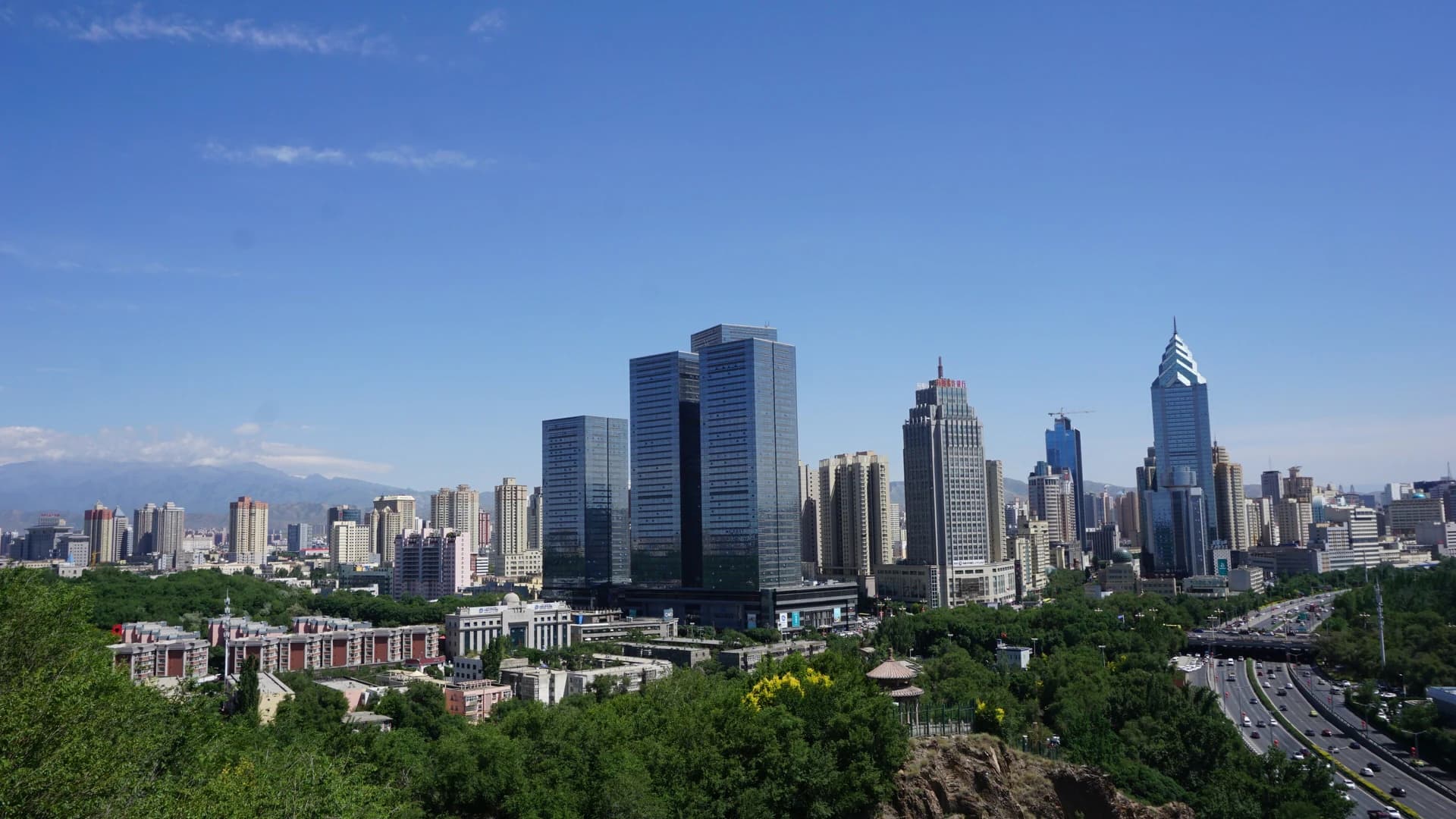
Urumqi lies on the northern side of the Tianshan, between mountain valleys and the southern edge of the Junggar Basin. Its deep continental location brings dry air, large temperature changes and long travel distances, while its position makes the city a practical starting point for journeys across northern Xinjiang.
The city brings together Uyghur, Han, Hui, Kazakh and other communities whose food, languages, music and faiths make a single-label description inadequate. Approach markets, museums and religious spaces with curiosity and restraint: ask before photographing people, follow local signs, and treat living culture as more than a performance for visitors.
Recommended itineraries
Recommended itineraries
Keep the urban introduction compact, then give each mountain outing its own day because weather and distance can reshape the plan.
City context and southern mountains
A concise first visit combining Xinjiang history and food with one landscape day close to Urumqi.
- Day 1 · Start at the Xinjiang Regional Museum, continue to Red Hill for a city overview and spend the late afternoon around the Grand Bazaar without treating it only as a shopping stop.
- Day 2 · Choose one Nanshan valley for a full-day outing, carrying layers and keeping the schedule flexible for mountain weather.
Urumqi with two mountain days
A balanced route for travelers using Urumqi as a base for both city culture and Tianshan scenery.
- Day 1 · Visit the Xinjiang Regional Museum, Red Hill and the Grand Bazaar, then settle into an early dinner of local noodles, naan or a shared chicken dish.
- Day 2 · Make Heavenly Lake the only major outing, confirming current access and weather before departure and leaving a generous return margin.
- Day 3 · Explore a Nanshan valley or Shuimogou at a slower pace, choosing the city park if conditions make a remote outing unwise.
Northern Xinjiang circuit
A long overland route from Urumqi through Altay, Bortala and the Ili valley, designed for travelers who can absorb substantial driving and keep the plan flexible.
- Day 1 · Use Urumqi for regional context, supplies and a measured start rather than adding a distant day trip.
- Day 2 · Travel north toward Burqin, breaking the journey at Colorful Beach if daylight and current access allow.
- Day 3 · Continue to Baihaba and settle into the village landscape without treating residents or livestock as photo props.
- Day 4 · Explore Kanas Lake and the river bays, choosing managed walks and viewpoints according to weather.
- Day 5 · Move to Hemu for village paths and surrounding grassland, leaving room for slow local transport.
- Day 6 · Make the long transfer south toward Kuitun and rest rather than forcing another major sight.
- Day 7 · Continue to Sayram Lake, allowing time for changeable wind, cold and current lakeside access.
- Day 8 · Cross Guozigou toward Yining, adding Huiyuan Ancient City only if the transfer remains comfortable.
- Day 9 · Travel into the Ili grasslands and use Nalati as the day’s single landscape focus.
- Day 10 · Continue to Bayinbuluk for wetlands and grassland views, keeping wildlife distance and accepting weather closures.
- Day 11 · Return toward Urumqi with a realistic buffer for road conditions and onward connections.
Attractions & practical tips
What to see—and how to approach it.
Xinjiang International Grand Bazaar
新疆国际大巴扎
A large market and cultural complex around Erdaoqiao where crafts, dried fruit, food and monumental architecture bring many strands of Xinjiang into one busy urban setting.
Practical tips
- Walk once before buying, compare quality and prices, and avoid assuming every product was made locally.
- Ask permission before close-up photography of vendors or worshippers and keep mosque entrances clear.
Xinjiang Regional Museum
新疆维吾尔自治区博物馆
The region’s central museum uses archaeological finds, textiles and historical displays to explain the peoples and exchanges connected by routes across Xinjiang.
Practical tips
- Visit early in the trip so later landscapes and cities have a clearer historical frame.
- Confirm current opening and reservation requirements through official channels rather than relying on old schedules.
Red Hill
红山
The red-rock landmark near central Urumqi provides a compact city walk and an elevated view toward the urban plain and surrounding mountains.
Practical tips
- Use it for orientation rather than expecting a remote mountain hike.
- Visibility varies with weather, so a clear morning or late afternoon is more valuable than a fixed time.
Shuimogou Park
水磨沟公园
A greener urban valley of springs, trees and paths that offers a quieter counterpoint to central Urumqi’s traffic and markets.
Practical tips
- Choose it when you want an easy half-day rather than a long transfer into the mountains.
- Keep to marked public paths and respect active community and religious spaces around the park.
Urumqi Nanshan
乌鲁木齐南山
The valleys south of the city bring spruce forest, grassland, waterfalls and seasonal snow within day-trip reach of Urumqi.
Practical tips
- Choose one valley and confirm transport back before setting out; Nanshan is a broad area, not a single compact park.
- Carry sun protection and warm, rain-resistant layers because mountain conditions can change quickly.
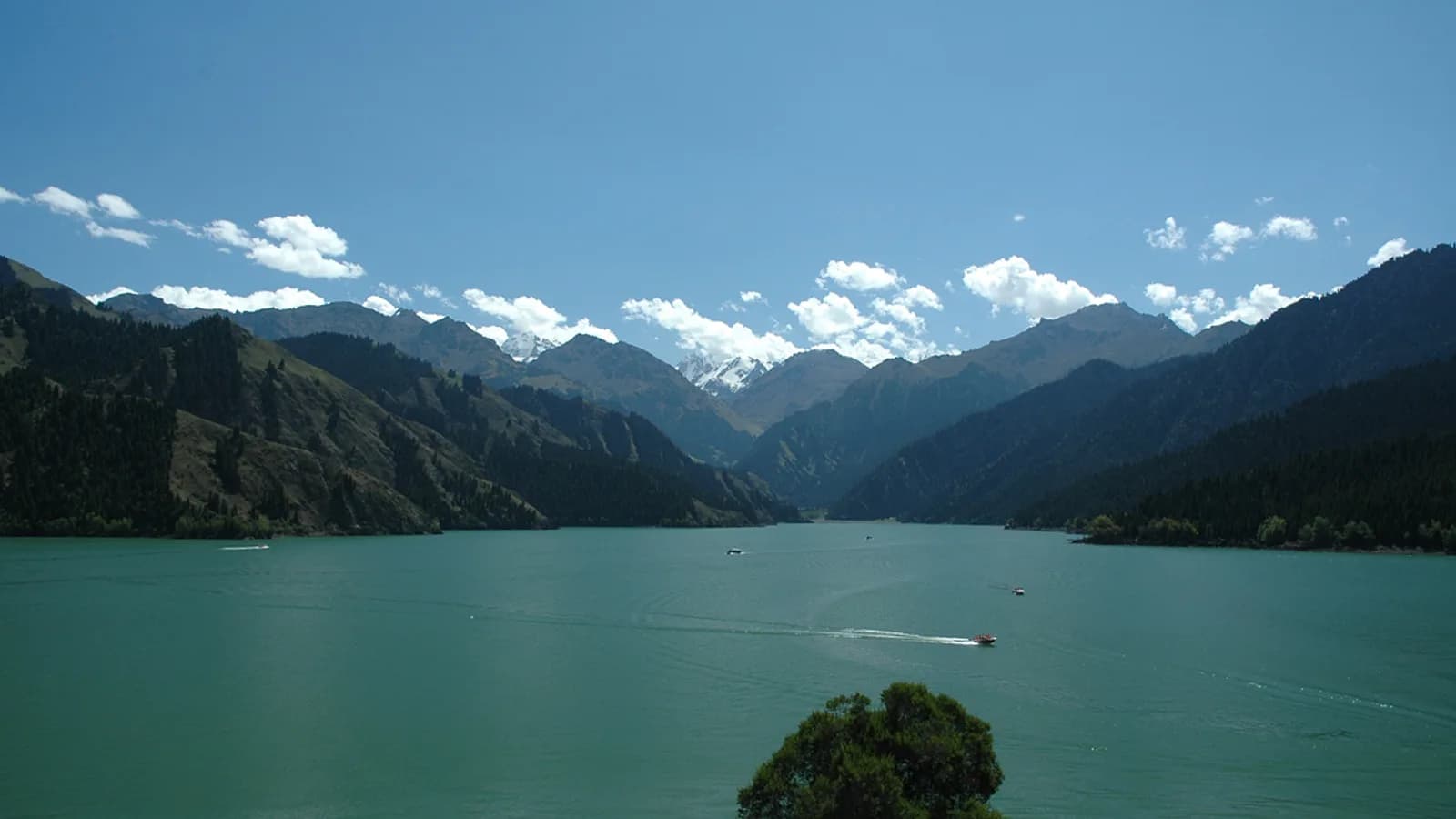
Heavenly Lake day trip
天山天池
Heavenly Lake lies outside Urumqi near Fukang, but it is one of the most common full-day journeys from the city, pairing a high mountain lake with views toward Bogda Peak.
Practical tips
- Treat it as a separate day and verify current tickets, transfers, weather and operating notices before leaving Urumqi.
- Temperatures can be much lower than in the city; bring layers and do not rely on a clear forecast at lower elevation.
Ulapo Ancient City
乌拉泊古城
An archaeological site south of Urumqi associated with historic settlement and the northern routes of the Silk Road.
Practical tips
- Visit for archaeological context rather than expecting a fully reconstructed ancient town.
- Access may be limited or change; confirm permission and transport locally before making a special trip.
Hantengri Mosque
汗腾格里寺
A prominent Uyghur mosque near the city center whose domes and minarets form part of Urumqi’s living Islamic landscape.
Practical tips
- Entry for non-worshippers may be restricted; observe signs and accept a closed door without pressing for access.
- Dress modestly, avoid prayer times and never photograph people at worship without explicit permission.
Food & dining
Eat with a little local context.
Urumqi is one of the easiest places to sample food from across Xinjiang. Many restaurants follow halal practice, so respect house rules, order meat dishes for the table and balance them with noodles, vegetables, fruit and tea.
Big plate chicken
大盘鸡
A generous shared dish of chicken, potatoes, peppers and spices, commonly finished with broad belt noodles that absorb the sauce.
Try it this way: Ask about portion size before ordering; even a smaller plate may be designed for several diners.
Xinjiang naan
馕
Round breads baked against the wall of a hot tannur, ranging from thin and crisp to thicker versions flavored with sesame, onion or milk.
Try it this way: Buy a fresh small loaf first and use it alongside grilled meat, tea or a saucy shared dish.
Laghman hand-pulled noodles
新疆拌面
Springy hand-pulled wheat noodles served with a stir-fry of vegetables and often beef or lamb, with many topping styles.
Try it this way: Ask for less chilli if needed, but expect a substantial meal rather than a light noodle snack.
Pepper chicken
椒麻鸡
Tender cooked chicken torn into pieces and dressed with scallion, chilli and a fragrant, numbing pepper sauce.
Try it this way: The numbing heat can build; share a portion and pair it with bread or a mild vegetable dish.
Baked samsa
烤包子
Crisp parcels baked in a tannur with a savory filling usually built from lamb or beef, onion, cumin and pepper.
Try it this way: Eat them carefully when fresh because the filling and rendered juices can be extremely hot.
Xinjiang pilaf
抓饭
Rice cooked with carrots, onion and lamb or another meat, producing a rich but straightforward staple found across the region.
Try it this way: Order earlier in the day at a busy specialist, since some kitchens make a limited batch rather than cooking each plate to order.
FAQ
Questions worth answering before you go.
How many days should I spend in Urumqi?
One day covers the museum, Red Hill and the Grand Bazaar selectively. Allow two or three days if you also want a separate outing to Nanshan or Heavenly Lake, and keep each mountain destination on its own day.
Why do I need layers even in summer?
Urumqi’s dry continental climate can bring a noticeable day-to-night temperature change, and nearby mountain areas are colder than the city. Carry sun protection plus a warm, wind-resistant layer on day trips.
Will language be a major problem?
Mandarin is widely used in transport, hotels and many shops, while Uyghur and other languages are also part of daily life. Keep destination names and your hotel address in Chinese, and use a translation app without assuming every person should speak English.
What should I know about eating in halal restaurants?
Follow the restaurant’s rules and do not bring outside food, alcohol or pork products into the space. If you are unsure, ask politely; respectful observation is better than making broad assumptions about every restaurant or community.
Can I combine Heavenly Lake and Nanshan in one day?
No. They are separate directions with meaningful travel time and variable mountain conditions. Choose one per day, verify current access, and leave enough margin to return before a fixed onward connection.