Last reviewed
Background
The Yellow River gives Lanzhou its shape, history and everyday rhythm.
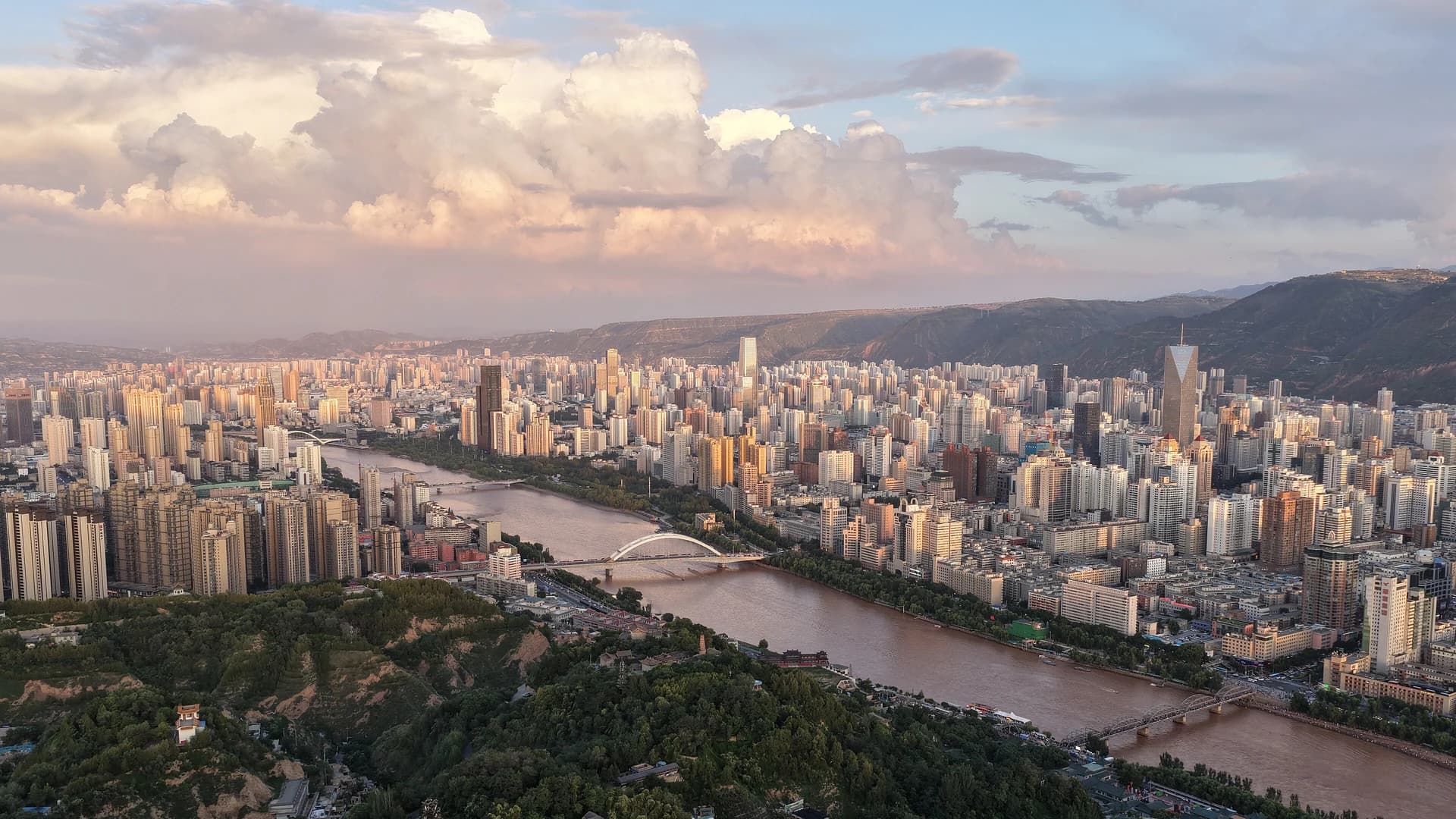
Lanzhou occupies a narrow Yellow River valley between dry northern mountains, producing the long east–west city visible from Baita Mountain. Known historically as Jincheng, it grew around a strategic river crossing and became an important link between central China and the Silk Road corridors to the west.
Today Lanzhou is both Gansu’s capital and a practical gateway to northwest China. Its strongest city experiences remain close to the river: old and modern bridges, waterwheel heritage, parks and public sculpture sit beside neighborhoods shaped by long-established Muslim communities and a food culture led by beef noodles, lamb, grains and sweet fermented drinks.
Recommended itineraries
Recommended itineraries
The central river sights fit into one active day. Add a second day for the provincial museum, a deeper food crawl and quieter urban sites.
Lanzhou along the Yellow River
A compact introduction connecting the city viewpoint, historic bridge, riverfront heritage and a southern park.
- Day 1 · Start on Baita Mountain for a view over the valley, descend to Zhongshan Bridge, then follow the south-bank riverfront past the Waterwheel Expo Park and Yellow River Mother sculpture. Finish at Five Springs Mountain or return to the river for the evening lights.
River city, museum and food
A slower first visit with time for Gansu’s archaeology and Lanzhou’s Muslim and market neighborhoods.
- Day 1 · Walk from Baita Mountain across Zhongshan Bridge and west along the riverfront to the waterwheels and Yellow River Mother sculpture, stopping for beef noodles and tea.
- Day 2 · Spend the morning at Gansu Provincial Museum, return to central Lanzhou for Five Springs Mountain, then explore the streets around Zhangye Road and West Gate Mosque respectfully before an evening snack crawl.
Attractions & practical tips
What to see—and how to approach it.
Baita Mountain Park
白塔山公园
The hill immediately north of the Yellow River provides Lanzhou’s clearest overview, with the white pagoda, Zhongshan Bridge and the city’s narrow valley aligned below.
Practical tips
- Walk up early for clearer air and softer light, then descend directly toward Zhongshan Bridge.
- Use the maintained paths and check current access if weather or construction affects the upper park.
Zhongshan Bridge
中山桥
Lanzhou’s historic iron bridge crosses the Yellow River beneath Baita Mountain and remains one of the city’s most recognizable pieces of infrastructure.
Practical tips
- Cross on foot to connect Baita Mountain with the south-bank river walk.
- Return after dark if the riverfront is well lit, but keep personal belongings secure in crowds.
Yellow River Mother Sculpture
黄河母亲像
He E’s reclining mother-and-child sculpture presents the Yellow River as a source of life and has become a concise symbol of Lanzhou’s relationship with the river.
Practical tips
- Include it within the river walk rather than making a separate trip.
- Step aside after taking photographs because the small viewing area can become congested.
Waterwheel Expo Park
水车博览园
Large traditional-style waterwheels and riverfront exhibits recall the irrigation technology once common along Lanzhou’s stretch of the Yellow River.
Practical tips
- Water level and seasonal maintenance affect whether the wheels are moving.
- Use the park as a shaded pause between Zhongshan Bridge and the western riverfront.
Five Springs Mountain Park
五泉山公园
A long-established park on the city’s southern slope combines springs, garden paths, pavilions and historic religious buildings.
Practical tips
- Choose one of the main uphill paths and allow extra time for steps.
- Treat temple buildings as active cultural or religious spaces and follow posted photography rules.
Gansu Provincial Museum
甘肃省博物馆
The provincial collection connects Gansu’s fossils, painted pottery, Silk Road exchange and later art, with the bronze Flying Horse of Gansu among its best-known objects.
Practical tips
- Reserve enough time for the archaeology and Silk Road galleries rather than visiting only the famous bronze.
- Check current reservation, closure and exhibition arrangements before arrival.
West Gate Mosque
西关清真寺
A prominent mosque near Lanzhou’s central commercial streets reflects the city’s long-established Hui Muslim community and contemporary religious life.
Practical tips
- Dress modestly, avoid prayer times and ask before entering because visitor access can change.
- Never photograph worshippers without permission; the exterior can still be appreciated if entry is restricted.
Qingcheng Ancient Town
青城古镇
A historic Yellow River town in Yuzhong County preserves lanes, courtyard houses and a quieter settlement pattern beyond central Lanzhou.
Practical tips
- Plan it as a separate half- or full-day excursion and confirm current transport before leaving the city.
- Respect residents’ privacy and do not enter domestic courtyards without an invitation.
Food & dining
Eat with a little local context.
Lanzhou’s food is inseparable from wheat noodles, beef and lamb, but its snack culture is just as distinctive. Muslim dietary traditions shape many kitchens, so use the Chinese names and ask vendors about ingredients rather than making assumptions.
Lanzhou beef noodles
兰州牛肉面
Freshly pulled noodles arrive in a clear beef broth with sliced meat, white radish, green herbs and red chilli oil, with several noodle widths to choose from.
Try it this way: Order at the counter, choose a noodle shape by pointing if needed, and eat promptly before the noodles soften.
Niangpi
酿皮
Springy sheets or strips of wheat-based starch are served cold with vinegar, garlic, sesame paste and chilli for a bright, savory snack.
Try it this way: Ask for less chilli before the sauce is added if you prefer a milder plate.
Huizi sweet pea soup
灰豆子
Dark peas are slowly cooked with dates into a thick, gently sweet soup that can be served warm or chilled.
Try it this way: Try it between savory snacks as a small dessert rather than ordering a large bowl with a full meal.
Milk, egg and fermented rice
牛奶鸡蛋醪糟
Milk, beaten egg and sweet fermented rice are cooked into a warm, lightly tangy dessert, often finished with nuts or dried fruit.
Try it this way: The fermented rice may contain a small amount of alcohol; ask the vendor if that matters to you.
Sweet peizi
甜醅子
Fermented oat or highland-barley grains produce a cool, sweet-tart snack with a chewy texture and faintly yeasty aroma.
Try it this way: Choose a busy vendor that keeps the mixture covered and properly chilled in warm weather.
Hand-grabbed lamb
手抓羊肉
Tender boiled or steamed lamb is cut into substantial pieces and served simply so the meat remains the focus.
Try it this way: Order by weight or portion, confirm the price first and share it with the table.
Sanpaotai tea
三泡台
A covered-bowl tea combines tea leaves with rock sugar, dates, goji berries or other aromatic additions for a sweet, layered drink.
Try it this way: Let it steep, use the lid to hold back the ingredients and ask for less sugar if you do not want a very sweet cup.
FAQ
Questions worth answering before you go.
Is one day enough for Lanzhou?
One active day covers Baita Mountain, Zhongshan Bridge and the central riverfront. Add a second day for Gansu Provincial Museum, Five Springs Mountain and a less rushed exploration of the city’s food.
What should I pack for Lanzhou’s climate?
The air can be dry and temperatures may shift between day and evening. Bring layers, sun protection, water and lip balm; check the forecast for wind, dust or rain before planning a long river walk.
Is Lanzhou only about beef noodles?
No. Beef noodles are the essential first meal, but niangpi, huizi, sweet peizi, milk-and-egg laozao, lamb and sanpaotai tea show a much broader mix of wheat, grain and Muslim-influenced food traditions.
Should I take a sheepskin-raft trip on the Yellow River?
Only consider a currently licensed operator when the service is officially running, and use the supplied safety equipment. Water conditions and regulation can change, so a riverfront walk is the reliable alternative.
Can I rely on the guide’s old prices and transport details?
No. Museum reservations, attraction access, bus routes, markets and river activities may have changed. Check current official information and live navigation shortly before each visit.